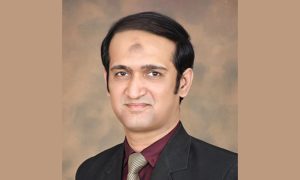


An interview with Ibad Hasan, President, ASHRAE Pakistan Chapter
Pakistan’s HVAC&R industry is entering an important phase of technological and professional evolution, with growing emphasis on energy efficiency, sophisticated systems, technical skills and internationally aligned standards. Speaking exclusively with Engineering Post, Ibad Hasan, President, ASHRAE Pakistan Chapter, discussed the changing HVAC&R landscape, the growing adoption of Variable Refrigerant Flow (VRF) technology, the industry’s skills gap, academia-industry collaboration and the objectives of HVACR Trends 6.0.
According to Ibad Hasan, the industry is going through an important period of evolution. We are seeing changes not only in technology but also in the way clients, consultants, contractors and developers look at HVAC systems. He explained that over the past decade the market has moved towards more sophisticated and efficient solutions, with VRF becoming an important option between conventional split systems and centralized chilled-water systems. “VRF has developed as an important solution between these two areas and has gained significant acceptance in commercial as well as high-end residential applications,” he said.
Discussing the importance of zoning and localized control, he emphasized that technology selection should always be based on the requirements of a particular project. The right question is always whether it is appropriate for a particular project. “The industry should therefore move away from simply asking, ‘Which brand should we use?’ and start asking, ‘What is the right solution for this application?’”
Ibad Hasan stressed that building characteristics, load profiles, operational requirements, installation conditions, end-user expectations and maintenance requirements must be evaluated before selecting a system. “One of the most important things is application suitability,” he said, adding that “design and piping requirements need careful attention, and installation quality has a direct impact on system performance.” He further emphasized that “specialized and properly trained technicians are essential for maintaining performance over the life of the system.”
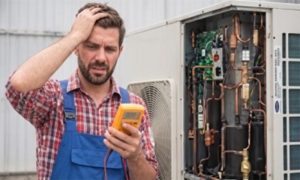
The skills gap remains a major concern for the sector. “Technology is developing quickly, but human resources do not always develop at the same pace,” Ibad Hasan observed. He called for training directly connected to industry requirements, covering design, technology selection, execution, installation and technically informed sales. “Training should therefore not be limited to theory. It needs to reflect what professionals actually encounter in the field,” he said.
Ibad Hasan also highlighted the importance of academia-industry collaboration. ASHRAE Pakistan is working with student bodies and engineering institutions, including NED University and DHA Suffa University. “The objective is to create stronger alignment between what students study and what the industry actually requires,” he explained.
Regarding ASHRAE’s contribution, Ibad Hasan said, “ASHRAE has always had an important role in knowledge sharing, standards, technical education and professional development.” He added that the organization wants to strengthen its local role through technical training and certification opportunities that respond to actual industry needs. “The industry cannot remain static. Technologies change, standards evolve and expectations from buildings continue to increase. Continuous learning therefore becomes essential,” he said.
Speaking about HVACR Trends 6.0, Ibad Hasan said the October 16–17 event at Pearl Continental Hotel Karachi aims to bring manufacturers, consultants, contractors, developers, students and international participants together “The focus is on the quality of interaction rather than simply the volume of traffic.”
Looking ahead, Ibad Hasan believes the sector’s progress will depend on technology, skills, collaboration and consistency. “Technology will continue to change.