
Report by Engineering Post
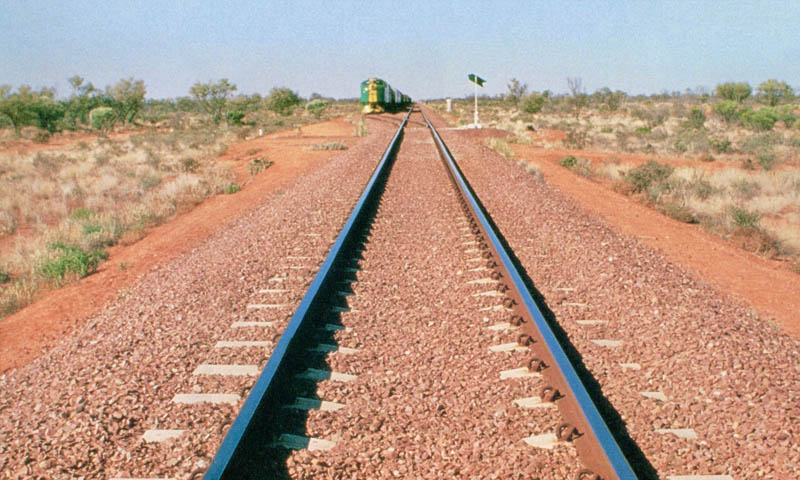
The up gradation of the Main Line (ML-1) mega railway project, spanning approximately 1872 kilometers from Karachi to Peshawar remained a strategic priority under bilateral cooperation during fy 2025-26.
According to the information now available from the official sources, third party financing by internal financial institutions Asian Development Bank (ADB) and Asian Infrastructure Investment Bank (AIIB) discussions advanced for the Karachi-Rohri section, while detailed financing and implementation proposals were also developed for the remaining sections up to Peshawar in close coordination with the Chinese side. Once completed, ML-1 is expected to substantially enhance Pakistan Railways operational efficiency by increasing train speeds from 65-105 km/h to nearly 160 km/h, improving freight handling capacity, reducing transit times, and strengthening north-south economic connectivity across the country. Significant headway was also achieved on the Karakoram High (KKH-Phase 11) Thakot-Raikot Realignment project, necessitated due to construction of Dasu Dam under Government-to-Government (G2G) cooperation framework. Both sides operationalized a phased implementation strategy and reached broad consensus on an 85:15 ratio financing arrangement. In Gwadar, the operationalization of strategic infrastructure projects continued to gain momentum. The East Bay Expressway, a 19 -kilometer six-lane corridor connecting Gwadar Port with the Makran Coastal Highway , continued to improve port accessibility, reduce cargo transit time, and enhance logistics efficiency for commercial and port-related traffic. Further progress was also achieved on Phase-II initiatives aimed at connecting Gwadar Port with the New Gwadar International Airport, including discussions on grant financing modalities and finalization of the draft Framework Agreement to strengthen integrated see-air connectivity among Gwadar Port, Gwadar Free Zones, and the airport. Gwadar Port and the Free Zones further progressed toward operational maturity through improved infrastructure provision.