

Report by Engineering Post
The automotive industry in Pakistan is a curious case. While the local industry has grown over the years but somehow it is still working much below its installed capacity and cars continue to remain out of reach for an overwhelming majority of the population.
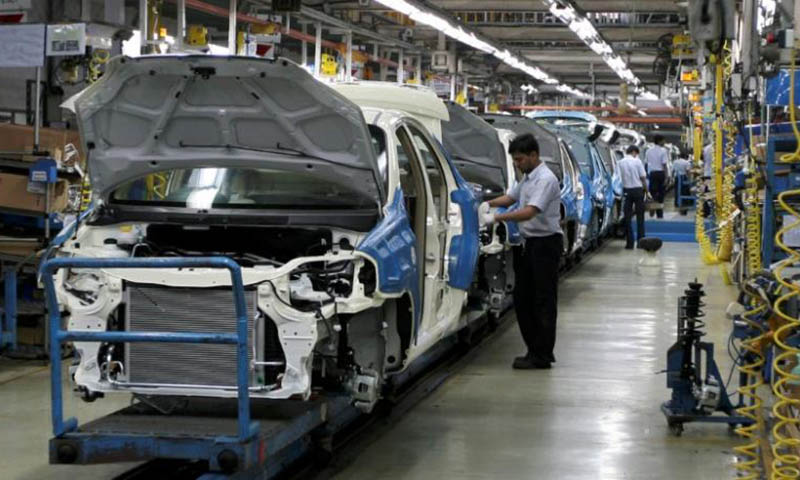
Generally speaking, manufacturing is an industry which touches on many aspects of the national economy. Cars manufacturing as such relies upon a host of other factors, metal, leather, electronic, glass, plastic, drivetrain components, nuts, bolts, braking systems, etc., each of which is manufactured in its own space.
Cars manufacturing is therefore the coming together of diverse ecosystems into one, and by that virtue it touches and sustains the lives of many. According to a report of the Competitive Commission of Pakistan (CCP), the auto sector was supporting 330000 jobs directly and 1.83 million jobs indirectly. In doing so, the auto industry is contributing 2.8 percent to the national Gross Domestic Product (GDP).
The local car industry started essentially way back in 1949, when General Motors and Sales Co established Pakistan’s first assembly plant. This was followed by Ford (1955), Chrysler (1956) and American Motors (1962). At this state, however, these plants relied totally on the import of Semi-Knocked Down (SKD) kits, which were then assembled into cars and trucks within plants. Gradually, through rising demands there came a push for more localisation, yet it did not reach significant levels, and the industry continued to suffer from high prices, limited models, and import dependence .
However, in 1972 the auto industry, like many others, was nationalized. The focus shifted from ensuring the industry had a broad local manufacturing base to running the plants profitably. Yet, in the 1980s, the understanding that competition was required to actually push the industry to the next level took hold. Private partnership emerged again as a mainstay of this effort, and this following decade saw the formation of multiple partnerships between local players and Japanese brands. Awami Autos partnered with Suzuki to form Pak-Suzuki Motor Company. Atlas Group and Honda partnered to form Honda Atlas Motors, while Indus Motors entered into a joint venture with Toyota to progressively manufacture Toyota vehicles locally. Consumers now had more chance with better options, and there was competition among these three pushing them to attract consumers by newer means even as they aimed to capitalize on a rising demand market for cars.
This ushered in a new phase, when each of these partnerships led to the formation of a local support ecosystem of vendors, laying groundwork for greater localization to take place. A Deletion Policy was introduced in 1987, whereby local car manufacturers were mandated to progressively ensure that the part of locally sourced components grew in their produced cars. CBU imports were taxed heavily. This Policy was phased out and replaced with a Tariff Based System in 2006, as part of compliance with World Trading Organization (WTO) trade measures. It kept higher import duties on parts that were being locally manufactured but reduced these duties for the import of non-localized parts.
At the same time, the federal government started to introduce dedicated policies to promote and expand the auto industry. The Auto Industry Development Programme (AIDP) was introduced in 2007 in order to improve efficiency, enhance productivity and quality standards, and to strengthen local vendor capacity. Although it laid a comprehensive plan for long term industrial growth, the AIDP suffered from a lack of consistent policy support, as well the federal government’s inability to fund and carry out key initiatives so laid out.
After the AIDP ran out its course, and after a 4-year delay, an Automotive Development Policy (ADP) was introduced in 2016. The ADP aimed to promote competition for encouraging new entrants, to increase localization, and to facilitate the local industry to become competitive and affordable, eventually leading to exports. Through the New Investment Policy, customs, tax, and duty incentives were granted to both Greenfield and Brownfield investors, Imports of vehicles were allowed under the gift personal baggage, and transfer of residence schemes.