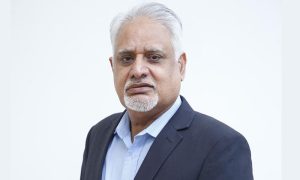


Engr. Dr. Muhammad Nawaz Iqbal
The entrepreneurial skills of technology driven engineers is a paradigm change from the traditional role of an engineer as a problem solver to that of an opportunity architect, a business builder and a societal innovator. In technologically driven economies, knowledge of engineering is not enough to create a sustainable economic or social value from an invention. Today’s engineer is required to be able to recognise gaps in the market, decipher technology trends, grasp market dynamics, rally resources and translate technology into viable solutions that can be taken to scale. This competency can be thought of as “engineering opportunity intelligence” – the ability to see entrepreneurial opportunities that are not apparent to the rest of the world in the midst of technological disruption. Technological intelligence allows engineers to not only react to technological change but to predict, influence and create markets for new opportunities in technology.
Problem reframing capability is an entrepreneurial competency that is inclusive of the 4th competency, which is a new one for technology driven engineers. Traditional engineering teaching focuses on solving the problems through technical means; while the way of solving the problems from the perspective of entrepreneurship is to first question whether the problems which are initially defined is the most valuable problem. An engineer can create a very complex product that is technologically capable, but is not commercially viable because he or she solved a problem that is not of interest to the market. The entrepreneurial engineer, then, should have to cross the line between technology and experience over and over again, converting technological challenges into customer-based opportunities. Asking the question ‘What else could this technology solve?’ can create totally new applications, business models and industries. Reframing the problem is therefore a competency that can help engineers to break out of the technological “tunnel vision” that can open up new, nontraditional entrepreneurial opportunities.
Technology to market translation is another competency that is developing as technology gets developed, and another that is becoming sought after.Another new competency in the making is technology to market translation, or the creation of a value proposition that the customer can understand from the complex engineering knowledge. Technical specifications, performance metrics, algorithms, tolerances, or system architecture are common methods that engineers use to communicate and customers use to assess solutions, and convenience, affordability, reliability, experience, risk reduction, and social impact are all key factors in customers’ evaluation of solutions. The business engineer needs to then become a translator between technology’s complexity and market’s meaning. This includes building good value propositions, building minimum viable products, customer discovery and the ability to present tech value without losing tech credibility. The key is that commercialization is not something that is done after engineering, but rather, market translation should be integrated at the start of the engineering design process.
Entrepreneurial cognition is likely to be among the most impactful competencies for future engineers that will be enhanced by AI. AI can analyze markets in a quick manner and can recognize new customer needs, develop alternative product ideas and scenarios, simulate business situations, predict customer demand and recognize technological complementarities. But the advantage of the entrepreneur won’t be just for engineers who are aware of how to leverage AI tools, it will be for those who can leverage AI-generated opportunities with human judgment, ethics, contextual intelligence and entrepreneurial intuition. Engineers need to understand how to work with AI, not against it, as it is not a decision maker, but rather a cognitive co-pilot. This gives rise to a new competency, that of algorithmic entrepreneurial judgment, where engineers have to be able to critically assess opportunities generated by the machines, identify hidden assumptions, evaluate technological feasibility and use their own skills to decide whether an opportunity generated by an AI is truly meaningful for humanity.
The next groundbreaking competency is the orchestration of resources in a technological uncertain situation. Often, engineering business startups have a limited amount of capital, staff, facilities, market access, and legitimacy. Entrepreneurial engineers need to master the art of doing more with less: combining university labs and industry collaborations, open source technologies, government initiatives, incubators, investors, distributed talent and digital platforms.
This is a change in the way we have thought about innovation in the past: we have thought that innovation needs to take place in the context of ownership of resources, but this is not what entrepreneurship is about, it is about orchestrating resources. An engineer with a conceptual idea and adept at developing strategic networks around them can excel at developing concepts over one who may have technical resources to match but less entrepreneurial connections. Resource orchestration is then a social networking activity becoming a key engineering entrepreneurship skill.
Failure-engineering competency, the systematic ability to design, measure and learn from failure as well as avoiding failure, is the other competency that is needed by technology-driven engineers. Conventional engineering norms focus on precision, reliability, safety, and reducing error, while that of entrepreneurship are based on experimentation, uncertainty, iteration, and validated learning. The entrepreneurial engineer needs to balance these apparently conflicting logics by separating the failures that are not acceptable from the failures that are “experimental” and play a useful role in the business strategy.
By rapidly prototyping, experimenting within an controlled environment, pilot testing, and incorporating customer feedback and iterative redesign, uncertainty can become knowledge. The revolutionary concept is to consider early entrepreneurial failure as a mechanism for infrastructure of market experimentation for engineers to find out what doesn’t work before they put a lot of resources into scaling the startup.
Another underdeveloped competence of the entrepreneur is the ability to manage intelligence in commercialization in an ethical way. The value created by technology-powered entrepreneurship can be gigantic but so can be its privacy implications, algorithmic discrimination, environmental damage, cyber security issues, technological exclusion and unwanted social effects. Entrepreneurial engineers will therefore have to assess if a technology is feasible to develop and to market, how it can be implemented and put into practice and who might be impacted by it. This competency combines engineering ethics and entrepreneurial strategy, leading to the development of an enterprise that relies on responsible innovation as its key business tool, instead of being a liability.