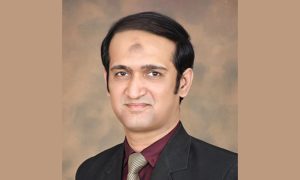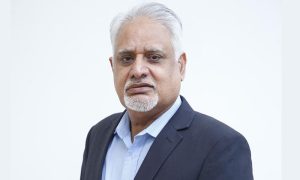


Engr. Maqsood Ahmed, Chief Executive, International Engineers, Talks to Engineering Post
International Engineers is one of Pakistan’s pioneering engineering consultancy firms with a distinguished legacy spanning more than four decades. Established in 1983 by Engr. Maqsood Ahmed, a Chartered Engineer, the company has played a vital role in shaping the country’s commercial, educational, healthcare and residential infrastructure through innovative engineering solutions. Over the years, International Engineers has successfully completed consultancy and engineering assignments for some of Pakistan’s most prominent institutions and landmark developments, earning a reputation for technical excellence, reliability and professionalism. Today, the company continues to contribute to major projects while embracing modern technologies such as intelligent building management systems and integrated automation solutions.
In an exclusive interview with Engineering Post, Chief Executive, Engr. Maqsood Ahmed reflected on his remarkable professional journey, the challenges facing Pakistan’s engineering industry, the need to revive local manufacturing, and the importance of improving engineering education to meet modern market requirements.
Sharing the story of his professional career, Engr. Maqsood Ahmed said “I arrived in Pakistan in 1978 and began my engineering career by working on several prestigious projects including projects of LDA Plaza at Egerton Road, Lahore & the Pakistan International Airlines (PIA) building at Egerton Road, Lahore and the State Life building in Peshawar. These projects provided me with valuable practical experience and laid the foundation for the successful engineering career that followed,”
After gaining extensive professional exposure, Engr. Maqsood Ahmed established International Engineers in 1983. He recalled that at the time engineering consultancy was still in its early stages in Punjab. “My firm International Engineers was the pioneer consultancy firms in the province,” he said. Starting from modest beginnings, the company steadily expanded its portfolio by consistently delivering quality engineering services and maintaining the highest professional standards to all types of industries & building.
Discussing some of the company’s landmark projects, Engr. Maqsood Ahmed said “International Engineers has provided consultancy services for all campuses of the University of Central Punjab and Punjab Colleges. All campuses of University of Lahore. Many buildings in Agriculture University, Faisalabad. The firm has also worked extensively with leading educational institutions including The City School, Beacon House School System and Lahore Grammar School,” In addition, the company has successfully completed consultancy assignments for hospitals across different sectors, reflecting its expertise in designing and managing technically demanding healthcare facilities.
On the commercial side, Engr. Maqsood Ahmed highlighted International Engineers’ involvement in several iconic developments Xinhua Mall, Pace Tower, Park Plaza Hotel in Gulberg, Lahore. These include the Madison Square project in Rawalpindi, while the company is currently engaged in the Madison Square project in Lahore. “Other notable projects include 1H Gulberg Tower and Sona Tower, where we have incorporated advanced Intelligent Building Management Systems (iBMS), enabling complete building automation along with integrated security and operational management,”
Despite prevailing economic challenges, Engr. Maqsood Ahmed expressed optimism regarding the future of Pakistan’s construction and engineering sectors. He observed that although the country is currently facing economic recession, numerous new development projects are still emerging in different parts of Pakistan. “The continued launch of commercial and residential projects demonstrates that investment opportunities remain available for capable engineering professionals who possess the required technical expertise and experience,” he stated.
However, Engr. Maqsood Ahmed voiced serious concerns about the declining state of Pakistan’s engineering manufacturing sector. He remarked that traders have significantly damaged the engineering industry by relying almost entirely on imports. “Instead of investing in manufacturing, many businesses simply import products, place their own labels on them and sell them at high profit margins. Pakistan has the capability to manufacture a long list of engineering products domestically, yet very little effort has been made to establish local production facilities,” he complained
Engr. Maqsood Ahmed is one of the few people in Pakistan with enough experience to have a birds eye view of the engineering sector of the country. During the conversation he explained that one of the biggest obstacles preventing industrial growth is the complicated regulatory environment. “Entrepreneurs who establish manufacturing units often face excessive bureaucratic procedures and repeated visits from officials of different government departments, creating unnecessary harassment for factory owners and workers alike. Such measures are extremely counter productive for the industrial sector,” he emphasized. He urged the government to simplify regulations, eliminate unnecessary bureaucratic hurdles and create a business-friendly environment that encourages investment in manufacturing.
Engr. Maqsood Ahmed emphasized that strengthening local manufacturing would produce multiple benefits for Pakistan. “It would substantially reduce dependence on imports, save valuable foreign exchange reserves and create employment opportunities for skilled workers. Furthermore, expanding domestic manufacturing would help develop technical skills among young engineers and technicians,” Which would ultimately help in strengthening Pakistan’s industrial base and making the economy more resilient.
Turning towards engineering education, Engr. Maqsood Ahmed expressed concern over the noticeable decline in engineering standards in recent years. “Many private universities have transformed engineering education into a commercial business by awarding degrees without adequately maintaining academic quality. In my opinion, several institutions have failed to update their curricula in accordance with changing industry requirements, leaving graduates inadequately prepared for the practical challenges of the engineering profession,” he observed.
Engr. Maqsood Ahmed urged both the government and educational authorities to review engineering education comprehensively. He stressed that engineering curricula should be regularly revised to align with technological advancements and evolving market needs. Universities must focus not only on theoretical education but also on practical training, industrial exposure and problem-solving abilities so that graduates are equipped to contribute effectively to national development.
Discussing the competitiveness of Pakistan’s engineering industry, Engr. Maqsood Ahmed identified high energy costs as one of the most significant challenges faced by manufacturers. “Expensive electricity, fuel and energy prices substantially increase production costs, making Pakistani products less competitive in international markets,” he explained. To address this issue, he suggested that Pakistan should explore affordable regional energy sources, including oil and fuel supplies from Iran, to reduce production costs and improve industrial competitiveness.
Reflecting on the changing professional environment within the consultancy sector, Engr. Maqsood Ahmed expressed concern over the growing trend of inexperienced professionals establishing consultancy firms immediately after graduation or with minimal field exposure. He observed that many young entrepreneurs open consultancy offices without acquiring sufficient practical knowledge or professional mentoring, resulting in engineering designs and project plans that often fail to meet acceptable professional standards.
He emphasized that engineering consultancy is a highly specialized profession that demands years of practical learning under experienced mentors. “Aspiring consultants should spend several years working alongside senior professionals before establishing independent practices. This period of apprenticeship would enable engineers to understand design principles, project execution, client management and professional ethics, all of which are essential for delivering safe and reliable engineering solutions,” he said.