
Trafo Engineering has come a long way since its establishment in 2000, developing from a small transformer repair business into an established engineering and manufacturing company with a growing presence in Pakistan’s industrial and power sectors.
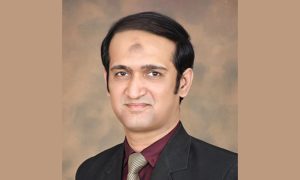
The company was founded by Mr. Barkat Ali, who started the business with an initial investment of just PKR 130,000. Its first major assignment was a two-year contract with K-Electric for the repair of distribution transformers ranging from 50 to 1500 KVA. The experience gained through this work provided the foundation for the company’s subsequent expansion.
In 2002, Trafo Engineering established its own factory with an initial workforce of only four people. More than two decades later, the company has a workforce of around 140 employees, while its estimated assets have grown to approximately PKR 650 million.
The company’s growth has largely been built around its ability to understand the requirements of industrial customers and provide locally manufactured and serviced electrical equipment. Its operations now cover the manufacturing, testing, repair and maintenance of a wide range of transformers and switchgear.
Its product range includes Distribution and Power Transformers, as well as specialized Furnace, VFD and Multi-Phase Shifting Transformers. Both oil-immersed and dry-type transformers are manufactured according to application requirements, while the company also works on customized solutions for industrial users.
Trafo Engineering has also developed capabilities in MV and LV Switchgear, including 11KV VCB and OCB panels. Alongside manufacturing, the company provides testing, maintenance and repair services, both at its Karachi facility and at customer sites.
Testing and maintenance have become an important part of the company’s activities. Its facilities support transformer testing, oil processing, insulation and high-voltage testing, while switchgear services include inspection and testing of circuit breakers and electrical connections. These services are aimed at helping customers maintain equipment reliability and avoid unnecessary interruptions to their operations.
A notable aspect of Trafo Engineering’s development has been its continued involvement with major institutional and industrial organizations. The company has maintained a long association with K-Electric, while for around two decades it has also worked as a term contractor for Military Engineering Services (MES), G.E. Services Army Malir Cantt. Its MES assignments have included HT and LT transformers, HT panels and other electrical works.
The company has continued its operations through periods when the business environment was challenging. Its management considers the experience gained during these years one of the reasons behind the company’s present position in the market.
Another area receiving attention is the development of specialized transformer solutions within Pakistan. Trafo Engineering has worked on 12-Pulse and 24-Pulse Furnace Transformers, K-Rated Transformers and VFD-related applications, areas where local manufacturing capability can help industrial users reduce dependence on imported equipment.
The company says its approach is based on quality, reliability and understanding each customer’s requirement rather than relying on standard solutions for every application. Its engineering and technical teams work with customers on equipment selection, testing, repair and maintenance according to site and operational needs.
For Trafo Engineering, the journey from a four-person operation to a company with a workforce of around 140 people represents more than business expansion. It also reflects the gradual development of local expertise in a field where quality electrical equipment and dependable after-sales support are critical to industrial operations.
With its manufacturing facility, testing capabilities, field experience and long-standing customer relationships, Trafo Engineering continues to build on the experience accumulated over more than two decades, while looking to expand its contribution to Pakistan’s industrial and power infrastructure.