
The Consultant’s Burden Engr. Fahim. I Siddiqui on Safety, Standards, and Uplifting Pakistan’s Industry
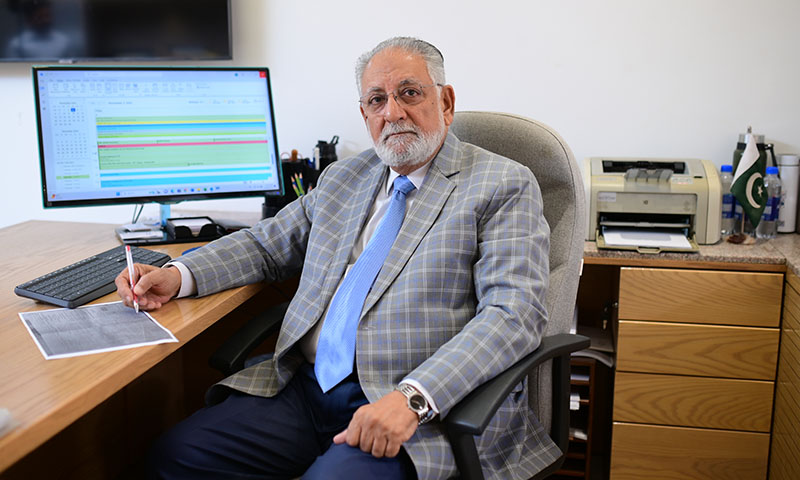
Karachi-based Fahim, Nanji & DeSouza (Pvt.) Limited, popularly known as FND, stands as a prominent pillar in Pakistan’s consulting engineering sector. Specializing in the intricate and critical realm of Mechanical-Electrical-Plumbing (MEP) Building Services, the firm has carved a significant niche, lending its expertise to projects spanning the length and breadth of the country. In a recent conversation with Engineering Post, Engr. Fahim I. Siddiqui, the firm’s CEO, painted a picture of cautious optimism, highlighting both the immense potential of Pakistan’s development landscape and the critical challenges that need addressing to unlock sustainable growth.
Despite navigating the complexities of Pakistan’s current economic climate, FND demonstrates remarkable resilience and proactive engagement. “Under the current economic conditions,” Engr. Fahim Siddiqui noted, “our company has submitted more than 150 proposals in this financial year.” This surge in activity isn’t isolated. He observes a tangible shift in the market’s trajectory: “Many mega projects are also coming to the market. Things are improving on a year-on-year basis.” This positive trend signals a broader change in sentiment. “Things are changing in the country for the better,” he stated emphatically. “I am expecting more investments to come in. Overall sentiment has changed in the market.”
This optimism is deeply rooted in Engr. Fahim Siddiqui’s assessment of Pakistan’s fundamental potential. He sees the nation as a vast, untapped frontier for development. “In terms of development, Pakistan is a virgin territory,” he declares. “There is a huge potential for growth.” A key asset in realizing this potential, he believes, lies within the country itself: “We have a fair amount of human resources available; reasonably educated & trained.” Furthermore, a promising trend is emerging: “Many companies have started moving towards local manufacturing”. This shift towards indigenous production capacity is crucial for Pakistan’s long-term economic health and self-reliance.
However, the CEO provides a nuanced perspective on the role of consultants like FND in fostering this local industry. “Consultants are only a conduit for meeting the requirements of the Client who establishes the standard of his projects and the budget that is available” he explains. While the desire to support Pakistani manufacturers is strong, the paramount responsibility remains delivering reliable and safe solutions. “We want to support the local manufacturers,” Engr. Fahim Siddiqui affirmed, “and as the quality of local manufacturing improves with time, more and more consultants will start using local products as well.” Quality and reliability are non-negotiable prerequisites for widespread adoption in critical MEP systems.
Engr. Siddiqui has repeatedly directed the Pakistani manufacturers to explore how Türkiye has emerged as a major manufacturer in the region in 15 to 20 years. However, he was surprised while talking to an HVAC professional visiting Pakistan when asked the question what support the Türkiye government has provided that contributed to the growth of the HVAC industry in Türkiye, he recounts. “To my surprise, he said there was no support. The progress was due to competition between different companies.” This underscores the powerful role of market-driven competition in fostering innovation and excellence. Yet, he contrasts this with the prevailing mindset he perceives in Pakistan: “The focus in Pakistan is to get rich overnight, which is counter productive. Money comes with time when quality becomes the prime focus.” For the HVAC industry to truly flourish, a fundamental shift is needed: “Once they start thinking long term, the industry can flourish very quickly.”
While advocating for a long-term vision and healthy competition, Engr. Fahim Siddiqui also acknowledged a pragmatic need within the Pakistani context. “In this country, we need some government support as well,” he asserts. He pointed to the challenging economic and regulatory environment, emphasizing that “in these conditions, it becomes the responsibility of the consultant to suggest the safest and most reliable product to the client.” This responsibility is amplified in an era of increasingly complex and large-scale construction. “With the trend of buildings moving towards high rise and malls spanning millions of square feet, the safety of people is a huge concern,” he stated. FND proactively addresses this critical aspect: “Our designs conform to established international safety standards ” a commitment bolstered by the fact that “in our company we also have two National Fire Protection Association (NFPA) certified engineers”.
To catalyze the necessary progress across the entire HVACR (Heating, Ventilation, Air Conditioning, and Refrigeration) and broader manufacturing ecosystem, Engr. Fahim Siddiqui champions a call for unity and strategic planning. “I have said it many times that the HVACR industry needs to come together and make a plan to present it to the government,” he urges. His vision involves collaborative action: “There should be a manufacturing association where all the manufacturers and leading industrialists sit together and develop a plan for the growth of the manufacturing industry.” Such a unified front, he believes, is essential to articulate needs, set standards, and drive policy conducive to sustainable industrial growth in Pakistan.
Reflecting on his own remarkable journey, building FND from a dream into a significant player over four decades, “Forty years back making and running a company of this scale was just a dream for me. Many times in my life I thought this dream might not come true but we have stuck to our core principles of integrity and quality and with time Allah has blessed FND with success.”
Engr. Fahim Siddiqui offers sage advice to the next generation of engineers. His counsel prioritizes foundational development over immediate reward. “The young generation should think only about improving themselves,” he advises. “At least in the first three to five years of their careers, the young engineers should only work on gaining experience & improving their skill set without thinking about small monetary gains.” This emphasis on skill acquisition and professional maturation is the bedrock for their growth and lasting success.
Finally, the CEO highlights a critical gap in the professional regulatory framework. While the Pakistan Engineering Council (PEC) serves as the “only regulatory body for Consulting Engineers,” Engr. Fahim Siddiqui points out a significant omission. “They have made grades for contractors but there are no grading for consultants. Anyone with a single desk can start consultancy.” This lack of minimum standards and a structured grading system for consultancy firms, he argues, undermines professionalism and quality assurance in the sector. “PEC needs to work on it,” he states firmly, advocating for a system that recognizes expertise, experience, and capability within the consulting domain, thereby elevating the profession to serve clients better.
In conclusion, Engr. Fahim Siddiqui and FND stand at an intersection of significant opportunity and pressing challenges. The firm is actively capitalizing on the improving economic sentiment and influx of mega-projects, leveraging its specialized MEP expertise honed over decades. While bullish on Pakistan’s “virgin territory” potential and its human capital, Engr. Fahim Siddiqui calls for a fundamental shift towards long-term thinking within the industry, coupled with strategic collaboration through a unified manufacturing association. He underscores the consultant’s vital, responsibility-laden role in ensuring safety and reliability, especially as buildings grow taller and more complex. His journey from dream to reality serves as an inspiration, and his advice to young engineers to prioritize learning offers a timeless blueprint. However, the call for PEC to establish proper grading and regulations for consultants remains a crucial piece of the puzzle for ensuring a consistently high-quality, professional engineering services sector that can truly support Pakistan’s ambitious development goals.