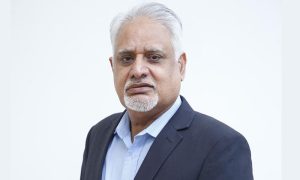


By Engr. Sheikh M. Ibraheem
The End of Net Metering
For nearly a decade, rooftop solar was one of the smartest financial decisions a Pakistani household could make. Export excess electricity, watch your bill drop to near zero. The public called it freedom from WAPDA.
That era is over. Pakistan has officially ended its net metering regime, introducing a new net billing framework under NEPRA’s Prosumer Regulations 2026 — fundamentally changing how solar producers are compensated and repealing the decade-old 2015 framework.
How Net Metering Worked (2015–2025)
The original framework was simple: for every unit exported to the grid, you received one unit of credit on your bill. One-for-one. Transparent, predictable, and financially compelling — especially as grid tariffs rose from PKR 9/kWh in 2015 to PKR 44/kWh by 2024.
The result was explosive adoption. Pakistan grew from 50 MW to over 6 GW of net-metered capacity, with 283,000 registered consumers. Solar wasn’t a luxury for middle-class families crushed by load shedding — it was survival.
What Changed
Under the new rules, utilities purchase your excess electricity at the national average energy purchase price, while selling back at the full consumer tariff. The asymmetry is stark: you sell at Rs. 11, you buy at Rs. 44–50. That gap is not a rounding error — it’s a structural penalty.
Why the Government Did This
Three reasons were cited: utility revenue collapse (electricity sales fell 3.2 billion units in FY2024, costing DISCOs Rs. 101 billion), grid instability from reverse power flows, and cross-subsidy concerns — net metering shifted an estimated PKR 159 billion in grid costs onto non-solar consumers who couldn’t afford panels.
These are legitimate concerns. The problem is not the diagnosis — it’s the prescription.
Who Is Affected
Existing consumers retain their current billing arrangements until their contracts expire. However, modifying or expanding your system will cost you your old rate protection. Don’t touch your system if you want to keep your old rate.
New consumers (post-December 2025) automatically fall under the new framework. The estimated payback period for residential solar has extended from 3–5 years to 10–12 years. This fundamentally changes the investment case for rooftop solar.
The Engineer’s Critique
The government’s financial argument has merit, but it targets the wrong problem. Distribution companies’ stress stems from 15–20% transmission losses, poor revenue collection, and excessive capacity payments to IPPs for electricity never dispatched — not from homeowners with solar panels. Penalizing prosumers while protecting inefficient utilities is not reform; it’s cost-shifting.
At a time when Pakistan faces severe air pollution and climate-induced disasters, discouraging rooftop solar also directly contradicts national environmental commitments.
What You Should Do Now
If you already have solar: do not modify or expand your system. Begin planning a battery storage strategy before your contract expires.
If you are planning to install: solar remains viable, but the strategy must shift:
- Size your system for self-consumption, not export
- Shift energy-intensive loads (HVAC, EV charging, appliances) to daylight hours
- Invest in hybrid inverters and battery storage to avoid exporting at Rs. 11/unit
Conclusion
Pakistan’s net metering era — built on fair compensation and a simple promise — has been replaced by a system that favors grid utilities over distributed producers. For engineers, it’s a call to redesign. For homeowners, it’s a call to adapt.
Solar is not dead in Pakistan. But the strategy must evolve — from grid dependence to energy independence.
Author Biography
Engr. Sheikh M. Ibraheem is a PEC-Registered Electrical Engineer, IEEE Member, and MSc holder in Electrical Engineering, currently serving as a Lecturer and Head of Robotics in Lahore, Pakistan. He specializes in Smart Grid technology, predictive energy management, embedded systems, and AI-driven optimization — with active research contributions and a growing portfolio of engineering books, structured courses, and academic work.
Beyond engineering, Ibraheem is an educator and author committed to making complex technical knowledge accessible. He runs sheikhibraheem.com as his professional platform for courses and content, and is currently writing a memoir titled Chasing Sunshine Through Broken Skies aimed at Gen Z readers. His long-term vision includes a PhD abroad in Electrical Engineering and AI, and building a globally recognized online learning platform.