
By Engr. Faheem Meer
About the Author
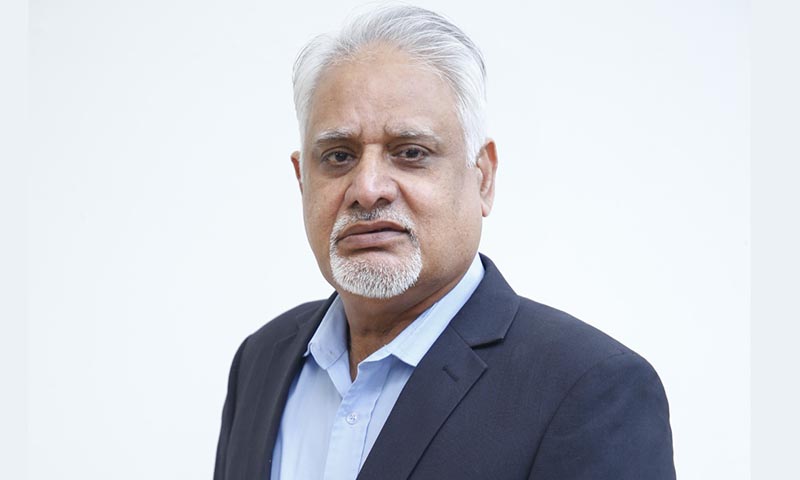
Muhammad Faheem Meer is a veteran cable industry professional with over 35 years of experience. An Electrical Engineering graduate from UET Lahore with an MBA in Marketing, he began his career at NESPAK in 1988. He has held key roles at Saudi Cable Company and Siemens in Saudi Arabia and the UAE, and has also contributed to leading local manufacturers such as Newage and GM Cables. He served as Regional Sales Manager at Brugg Cables in Dubai, one of the most reputed Swiss manufacturers of extra high voltage underground cables. Currently, he works as a freelance management consultant, supporting Worldwide Cables (Pvt) Limited, Pakistan Solar Association, and other organizations in various capacities.
Introduction:
An Ethernet cable is a physical networking cable with copper conductors that connects devices within a Local Area Network (LAN), such as computers, routers, and switches. Often synonymous with the term “LAN cable,” Ethernet cables enable seamless communication between devices via a network connector.
An Ethernet cable consists of eight twisted wires arranged in four pairs; a design referred to as a “twisted pair.” The twisting pattern and shielding type play a critical role in minimizing electrical interference and ensuring reliable data transmission. These features are categorized based on their performance and shielding levels, enabling compatibility and performance consistency across manufacturers.
Applications:
Ethernet (LAN) cables, typically using twisted pair wiring like Cat5e, Cat6, or Cat7, are used in a wide range of applications where wired network connectivity is required. Some of the most common and practical applications are;
Home Networking; connecting routers to devices like PCs, smart TVs, and gaming consoles.
Office and Business Networks; connecting workstations, servers, and printers to a central network and VoIP phones.
Educational Institutions; wiring computer labs, libraries, and administration offices. Supporting high-speed internet for learning platforms and research.
Industrial and Factory Environments; used in Industrial Ethernet for connecting machines and control systems and reliable data transfer for automation systems and monitoring sensors.
Data Centers; essential for interconnecting servers, switches, and storage devices.
Gaming and Media Production; gamers and video editors often prefer Ethernet for lag-free online gaming and fast file transfers. Also used to connect NAS (Network Attached Storage) for backing up large media files.
Internet of Things (IoT) Devices; certain IoT devices like security cameras, access control systems, or smart thermostats use Ethernet for power and data (PoE – Power over Ethernet).
In Pakistan, LAN cables applications range from basic internet connectivity in residential setups to structured cabling networks in corporate environments, banking networks, educational institutions, and large-scale projects such as smart buildings and surveillance systems. With the growing demand for high-speed data transmission, categories like Cat-6 and Cat-6a are increasingly preferred for their superior performance and reliability. The Pakistani market is dominated by international brands, though most of the available stocks are counterfeits manufactured by alien manufacturers. These fake brands are non-tested and perform very low in terms of bandwidth, noise and other parameters. In past few years, local manufacturers have also entered in the market and many known and new companies are now manufacturing quality products in Pakistan with proper testing.
Product Specifications:
Presently, LAN cables in Pakistan are available in Cat-5, Cat-6, Cat-6A, and Cat-7 variantsin following constructions & combinations:
- U/UTP (Unfoiled – Unfoiled Twisted Pairs):
- No shielding beyond the outer casing.
- Cost-effective but susceptible to interference, making it unsuitable for noisy environments.
- F/UTP (Foiled -Unfoiled Twisted Pairs)
- Features overall foil shielding around the eight conductors but not to individual pairs.
- Provides moderate protection against interference.
- SF/UTP (Shielded Foiled- Unfoiled Twisted Pairs)
- Foil shields overall four and includes an additional overall shield for the eight cores.
- Offers the highest protection, ideal for harsh environments.
- SF/FTP (Shielded Foiled- Foiled Twisted Pairs)
- Foiled each of the four pairs individually and includes an overall shield for the eight cores.
- Offers superior EMI/RFI protection, offers better crosstalk suppression, high performance at higher bandwidths and longer run and is more reliable in PoE, ideal for industrial and data sensitive environments.
| COMPARISON; Cat-6, Cat-6a & Cat-7 Cables | |||||
| SN | X-tics | Cat-6 | Cat-6a | Cat-7 | |
| 1 | Bandwidth Support | 250 MHz | 500 MHz | 600 MHz | |
| 2 | Max. Data Transfer Rate | 1 Gbps up to 55m, 10 Gbps up to 33m | 10 Gbps up to 100m | 10 Gbps up to 100m | |
| 3 | Max. Cable Length | 100 meters (for 1 Gbps) | 100 meters (for 10 Gbps) | 100 meters (for 10 Gbps) | |
| 4 | Crosstalk Reduction | Moderate | Better than Cat-6 | Superior due to full shielding | |
| 5 | Connector Type | RJ-45 | RJ-45 | GG45 (backward-compatible with RJ-45) | |
| 6 | Cable Diameter | Thinner than Cat-6a and Cat-7 | Thicker than Cat-6 | Thicker than Cat-6 and Cat-6a | |
| 7 | Cost | Lower cost | Higher cost than Cat-6 | Highest cost among the three | |
| 8 | Use Case | Standard home and office networks, surveillance etc. | High-speed networks, data centres, offices | High-performance networks, data centres, industrial settings | |
| 9 | Max Distance for 10 Gbps | 33 meters | 100 meters | 100 meters | |
| 10 | Backward Compatibility | Compatible with Cat-5 and Cat-5e | Compatible with Cat-6 and Cat-5e | Compatible with Cat-6a, Cat-6, Cat-5e | |
| 11 | Applicable Standard | ANSI/TIA-568-C.2 | ANSI/TIA-568-C.2 | ANSI/TIA-568-D.2/ IEC 11801 | |