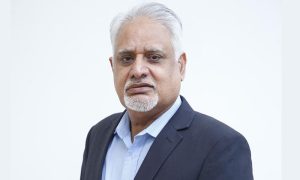

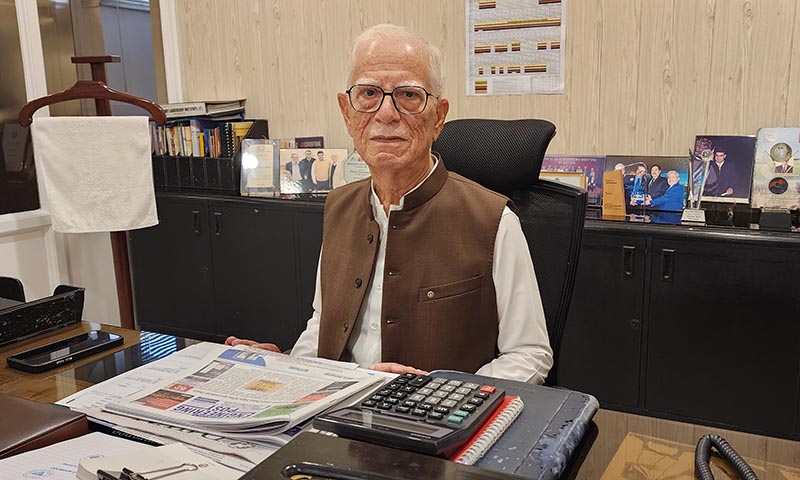
An exclusive conversation with Engr. M. Saeed Shamsi, CEO, Potential Engineers (Pvt.) Ltd.
Potential Engineers has emerged as one of Pakistan’s growing engineering and contracting companies, actively contributing to the country’s power transmission and grid infrastructure through the successful execution of high-voltage transmission line and grid station projects. With an expanding portfolio of strategic assignments undertaken in collaboration with both local and international partners, the company has established itself as a reliable engineering contractor capable of delivering technically demanding projects. In an exclusive interview with Engineering Post, Chief Executive Engr. Saeed Shamsi shared his views on the company’s achievements, the challenges confronting the power sector, and the reforms needed to ensure Pakistan’s energy security and economic growth.
Highlighting the company’s recent accomplishments, Engr. Saeed Shamsi revealed “Potential Engineers is currently actively involved, as a subcontractor, with Chinese partners in the construction of the 765 kV transmission line from Dassu to Islamabad, one of Pakistan’s most significant power transmission projects,” The company is also executing the Nowshera-Swabi transmission line, further strengthening the national transmission network. Another landmark assignment is the 220 kV grid station at the Dhabeji CPLC Industrial Zone, where Potential Engineers is responsible for the construction of the Transmission Line, demonstrating its expertise in executing complex high-voltage infrastructure works.
Discussing the challenges faced by engineering contractors, Engr. Saeed Shamsi identified the issue of Right of Way (ROW) as the single biggest obstacle delaying infrastructure development in Pakistan. “The biggest issue we are facing is the Right of Way. A project planned for completion in six months can stretch to three and a half years simply because timely access to the required land is not available. Even today, some projects remain incomplete due to this problem,” he remarked.
Speaking about reforms in Pakistan’s electricity sector, Engr. Saeed Shamsi welcomed the establishment of the National Grid Company (NGC), explaining that the model has been developed on the lines of the National Grid Company of Great Britain. “The basic idea is to allow electricity distribution companies to purchase power from the most economical source available. If one generating station offers electricity at a lower tariff than another, the buyer should have the freedom to select the cheaper option. This competitive framework can ultimately reduce electricity costs for consumers,” he explained.
Referring to the rapid growth of solar energy adoption in Pakistan, Engr. Saeed Shamsi observed that an increasing number of consumers are shifting towards solar power, resulting in mounting financial pressure on power distribution companies. “Instead of relying heavily on expensive diesel and furnace oil-based generation, distribution companies should focus on cheaper alternatives such as wind and solar energy. If affordable electricity is provided to consumers, the motivation to invest towards independent solar systems will naturally decline,” he said.
Sharing his broader economic vision, Engr. Saeed Shamsi stressed the importance of strengthening regional trade relations. He called for constructive dialogue with Iran and Afghanistan to restore formal trade, particularly in the energy sector. “Pakistan should legally import affordable oil and gas from Iran instead of allowing informal channels to flourish. Official trade will benefit both economies while reducing energy costs,” he said. He further emphasized that accelerating the development of Gwadar Port, completing the ML-1 railway project, improving road infrastructure, and ensuring secure transit routes would enable Pakistan to become a regional trade and transit hub, unlocking substantial economic opportunities for the country.