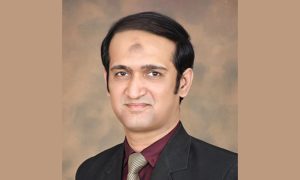

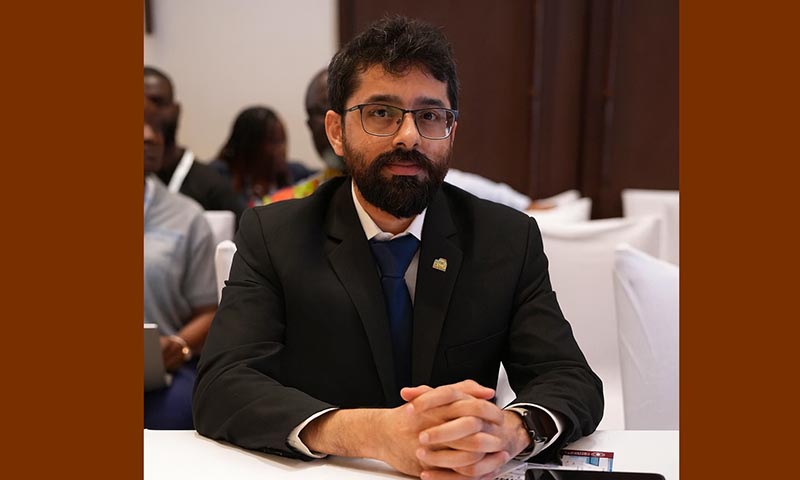
Shuja Khalid President ASHRAE Pakistan Chapter
In an exclusive conversation with Engineering Post, Shuja Khalid, President of ASHRAE Pakistan Chapter, outlined the organization’s upcoming initiatives, long-term goals, and the pressing challenges facing Pakistan’s HVACR and building technologies sector. With a renewed focus on capacity building, energy efficiency, and global-standard compliance, ASHRAE Pakistan Chapter is preparing for a very active year.
Speaking about ASHRAE Pakistan Chapter’s role, Shuja Khalid emphasized that the organization has continually operated as a hub for technical growth and knowledge exchange. “Our Chapter has always been committed to arranging events, seminars and technical sessions that uplift our members and the broader engineering community,” he remarked.
The spotlight this year is on the much-anticipated HVACR Trends Expo and Conference scheduled for December 12 and 13 at Marriott Hotel Karachi. This year’s edition, HVACR Trends 5.0, promises deeper insights and global participation. “For 2025, our theme is ‘smart decarbonization.’ It is time Pakistan aligns with global sustainability goals, and HVACR Trends 5.0 will focus exactly on that,” Shuja Khalid said. He added that the event will bring together top experts, practitioners, and students to discuss emerging solutions for low-carbon systems and energy-efficient building designs.
Beyond the December event, ASHRAE Pakistan Chapter is preparing a series of high-level training workshops and lectures in January, featuring international industry leaders. “We want Pakistani students, consultants and engineers to benefit from global expertise. These workshops will be open to participants from all over Pakistan, and the idea is to equip our young professionals with skills that match global standards,” Shuja Khalid explained.
A significant part of ASHRAE Pakistan Chapter’s mandate revolves around policy influence. The chapter’s Government Affairs Committee regularly engages with regulators to advocate for the adoption of ASHRAE standards in national infrastructure and construction practices. “We are actively proposing that Pakistan adopt key ASHRAE standards. Our committee is working on areas like green buildings, smart decarbonization and improved energy codes, these are essential for future-ready engineering,” Shuja Khalid highlighted.
Supporting young engineers remains a priority for the chapter. ASHRAE Pakistan Chapter operates internship and mentorship programs for students from engineering universities. “Students are at the heart of Pakistan’s engineering future. Through internships, mentorships and grants, we want them to have access to real-world learning and research opportunities,” said Shuja Khalid. He shared that ASHRAE also provides grants to universities to promote research that contributes to innovation in HVACR and sustainable building technologies.
Discussing industry realities, Shuja Khalid pointed out several structural challenges. “Pakistan is still heavily dependent on imports in many engineering categories. Regarding local manufacturing, one of the biggest hurdles is the high cost of testing laboratories. Because the labs are so expensive, manufacturers skip proper testing, which affects product reliability and certification,” he said. He emphasized that although local manufacturing is gradually improving, Pakistan must prioritize investment in testing infrastructure. “If we want to compete globally and even regionally, we must strengthen testing, certification and compliance. There is no alternative,” Shuja Khalid stressed.
Looking ahead, Shuja Khalid reiterated ASHRAE Pakistan Chapter’s commitment to advancing energy efficiency and sustainable engineering practices. “Our goal is to steer Pakistan toward a smarter, cleaner and more efficient future. With consistent collaboration, knowledge sharing and adherence to standards, we can achieve it,” he concluded.