
The National Highways Authority (NHA) will receive Rs100 billion from the petroleum development levy to execute three crucial highway projects in Balochistan, against an initial demand of Rs160.2 billion for the current financial year.
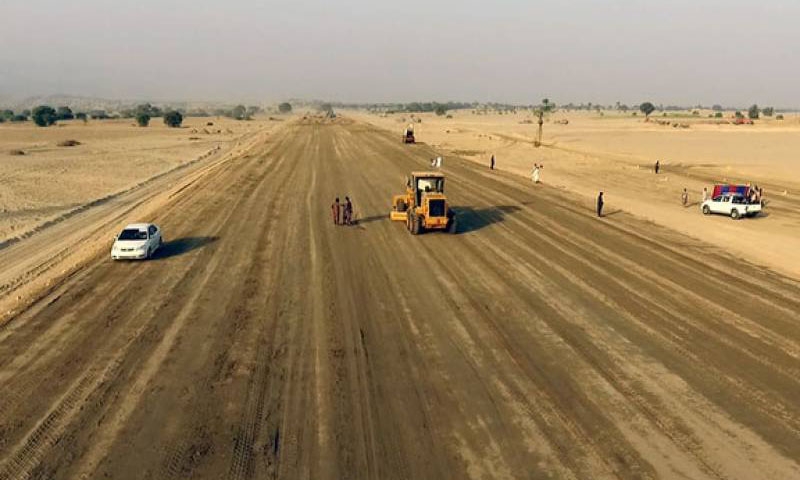
According to NHA’s internal documentation, the funding has been allocated under the Public Sector Development Programme (PSDP) for fiscal year 2025–26. The projects target key sections of National Highway N-25, known for its dangerous conditions and alarming fatality rate, earning it the grim nickname “deadly road.”
The Rs100 billion will be distributed as follows:
-Rs34 billion for the dualisation of the Khuzdar–Kuchlak section (330.52 km), compared to a demand of Rs50.8 billion.
-Rs33 billion for dualisation and rehabilitation of the Karachi–Quetta–Chaman road (273 km), falling short of the Rs52.5 billion request.
-Rs33 billion for dualisation of Kararo–Wadh (83 km) and Kuchlak–Chaman (104 km) segments, totaling 187 km, despite a Rs56.9 billion requirement.
The NHA is currently overseeing projects worth Rs2,200 billion. While it proposed funding for 161 schemes in the upcoming PSDP, only 105 received federal approval, with Rs227 billion allocated overall.
Facing funding constraints, the authority ramped up self-financing efforts, generating Rs64.8 billion in FY2025 through toll taxes and other sources—double the Rs32 billion collected the previous year. These internally generated funds will go toward maintenance and rehabilitation of existing infrastructure.
Prime Minister Shehbaz Sharif, in April, opted to channel the fiscal space created by declining global oil prices into strategic infrastructure development. Instead of offering direct relief to consumers, he directed the savings toward the reconstruction of the N-25 Highway and the second phase of the Kachhi Canal project.
The N-25 highway—connecting Karachi, Chaman, Quetta, Kalat, and Khuzdar—has reportedly claimed over 2,000 lives in recent years due to its deteriorated, single-lane condition. The reconstruction plan, now estimated at Rs300 billion, will proceed under direct federal oversight, with third-party validation to ensure transparency and construction quality.
Originally approved in 2022–23, the project had stalled due to persistent funding gaps, until now.