
Engr. Khalid Pervez on the Price of Political Interference
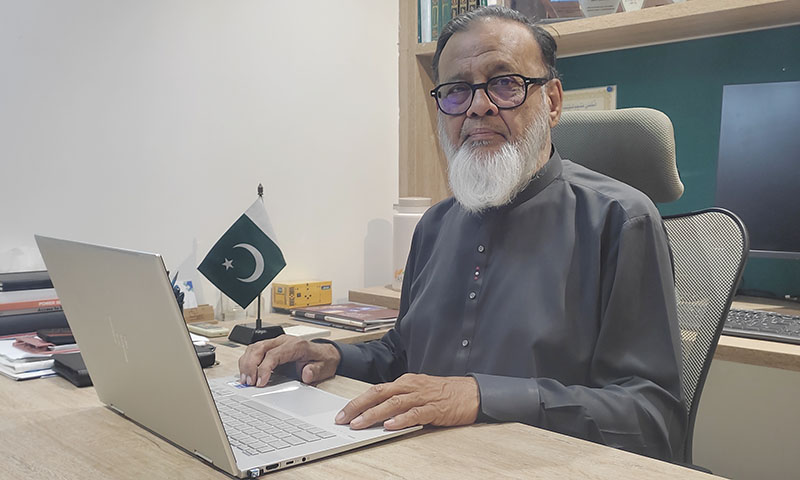
In an exclusive conversation with Engineering Post, Engr. Khalid Pervez, Chief Executive Officer of KPWS Consulting, shared his in-depth views on Pakistan’s growing energy crisis, the systemic challenges behind unaffordable electricity, and the pressing need to bring technical expertise back into policy and decision-making. With a career spanning decades in engineering consultancy and infrastructure development, and having led KPWS Consulting, a company founded in 1971 that has successfully provided engineering and project management services across Pakistan, the Middle East, and Africa. Engr. Khalid Pervez offers a seasoned, deeply technical perspective on the country’s energy landscape.
He began by outlining the legacy and mission of KPWS Consulting, emphasizing that the firm has built its reputation on providing practical, sustainable, and technically robust solutions to engineering challenges. “At KPWS Consulting, we specialize in engineering and project management disciplines, offering consultancy services in sectors like power, water, infrastructure, and industry,” he explained. “Over the last three decades, our work has always been guided by one principle, sound engineering judgment must drive every project. Whether in Pakistan, the Middle East, or Africa, our goal has been to combine local expertise with global best practices to ensure long-term, cost-effective, and sustainable results.”
Turning to the heart of the discussion, Engr. Khalid Pervez addressed the deteriorating situation in Pakistan’s power sector, describing it as one of the most critical economic and technical challenges facing the nation. “Electricity prices in Pakistan have become extremely high so high that electricity is practically unaffordable for the common citizen,” he said. “The causes are complex, but if we look closely, we see that the core issue is not simply high generation costs. The real problem lies in political interference, inefficiency, and the absence of technical decision-making at the policy level.”
He highlighted the mismatch between Pakistan’s generation capacity and its actual electricity demand. “Our maximum national demand stands at around 30,000 megawatts, while our installed capacity is close to 47,000 megawatts,” he pointed out. “Yet, despite having excess capacity, we are still facing energy shortages, circular debt, and rising tariffs. This paradox exists because we are bound by capacity payment agreements with independent power producers. Whether the electricity is utilized or not, the government is obliged to pay them, which puts immense pressure on public finances.”
Explaining further, he noted that the circular debt, now exceeding Rs 2.9 trillion, continues to expand because of poor recoveries and inefficiencies in the power distribution system. “If electricity was being consumed efficiently and the government was recovering payments from end-users, it would be easier to manage this financial burden,” he said. “However, with high transmission losses, theft, and poor governance, the system remains financially unsustainable.”
Engr. Khalid Pervez was particularly critical of the absence of technocrats in major decision-making bodies. “Most of the key energy-related decisions are taken in cabinet committee meetings chaired by ministers who often lack the necessary technical understanding,” he said. “These are engineering-driven issues that require technical expertise and analytical insight, not political compromises. When political priorities outweigh engineering realities, the result is unsound planning and escalating costs.”
He pointed out that political appointments in power sector organizations, especially in distribution companies (DISCOs), have severely undermined performance. “If you analyze the boards of directors and chairmen of most DISCOs, you would expect to find professionals with strong backgrounds in electrical distribution, energy management, or power systems. Unfortunately, most of them are political appointees, and this needs to stop,” he emphasized. “Until we depoliticize our energy sector and allow qualified professionals to lead, meaningful improvement will remain out of reach.”
Discussing the generation mix, Engr. Khalid Pervez observed that Pakistan has failed to capitalize on its renewable energy potential. “Less than 12 percent of our installed capacity comes from solar and wind energy,” he said. “We should have focused on tidal energy, solar power, and other low-cost green energy solutions much earlier. Instead, we relied too heavily on imported fuels, which made our system vulnerable to global price fluctuations.”
He stressed that renewable energy, while essential for sustainability, comes with its own challenges. “Renewables introduce variability and fluctuations in the grid,” he explained. “To manage this effectively, the power transmission system must be robust, stable, and based on sound engineering design. Unfortunately, our transmission network is outdated and suffers from multiple shortcomings. Without proper investment in grid stability and smart infrastructure, renewable integration will remain problematic.”
Beyond renewables, Engr. Khalid Pervez also highlighted the underutilization of indigenous resources like coal. “We have significant coal reserves that could be used efficiently and responsibly for power generation,” he said. “The goal should be to strike a balance between renewable and conventional resources while ensuring cost efficiency and environmental compliance.”
He further discussed the institutional weaknesses that have prevented effective long-term planning. “The Planning Commission of Pakistan needs to be empowered,” he asserted. “It should be supported by competent technocrats who can make policies on a technical basis rather than political grounds. The Pakistan Engineering Council (PEC) also has a major role to play. Currently, the contribution of PEC toward uplifting engineers and supporting local engineering companies is not sufficient. PEC must take a more proactive role in capacity building, policy advocacy, and promoting the interests of the engineering community.”
Engr. Khalid Pervez emphasized that sustainable progress in the power sector requires not only infrastructure investments but also structural and governance reforms. “Our current challenges, high electricity prices, circular debt, and operational inefficiencies cannot be solved by simply adding more power plants,” he said. “We need to fix the fundamentals: governance, transmission, planning, and technical oversight. Unless technical professionals are brought back into the center of decision-making, we will keep repeating the same mistakes.”
Reflecting on the broader implications, he noted that the power crisis is deeply intertwined with Pakistan’s economic health. “High electricity prices make our industries uncompetitive and discourage investment,” he explained. “For a developing economy like ours, affordable energy is the backbone of industrial growth. When energy becomes unaffordable, manufacturing declines, exports fall, and unemployment rises. It becomes a vicious cycle.”
He suggested several practical measures to address the crisis. “Firstly, political interference must end. Decision-making should be entrusted to qualified professionals. Secondly, our energy planning must be long-term, data-driven, and based on realistic demand forecasts. Thirdly, we must prioritize low-cost renewable energy and strengthen our grid to handle its integration. And lastly, there must be transparency and accountability in every aspect of the power sector, from generation to billing.”
Speaking about his own organization, Engr. Khalid Pervez reiterated that KPWS Consulting remains committed to promoting engineering excellence and sustainable development. “At KPWS, we believe that the foundation of progress is strong technical capacity and professional integrity,” he said. “We have successfully worked with both public and private sector clients, offering end-to-end project management and design consultancy services. Our experience across different regions has shown that when governments invest in technical competence and remove political barriers, infrastructure development flourishes.”
Engr. Khalid Pervez offered a clear and candid message to policymakers: “Pakistan has the technical talent and natural resources needed to achieve energy self-sufficiency. What we lack is consistent, technically sound leadership in the power sector. Political decisions without engineering insight have repeatedly derailed our progress. It’s time we let technocrats, engineers, and energy experts take the lead in shaping our energy future. Only then can we hope to provide affordable, reliable, and sustainable electricity to our people.”