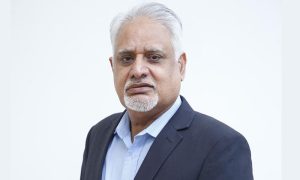

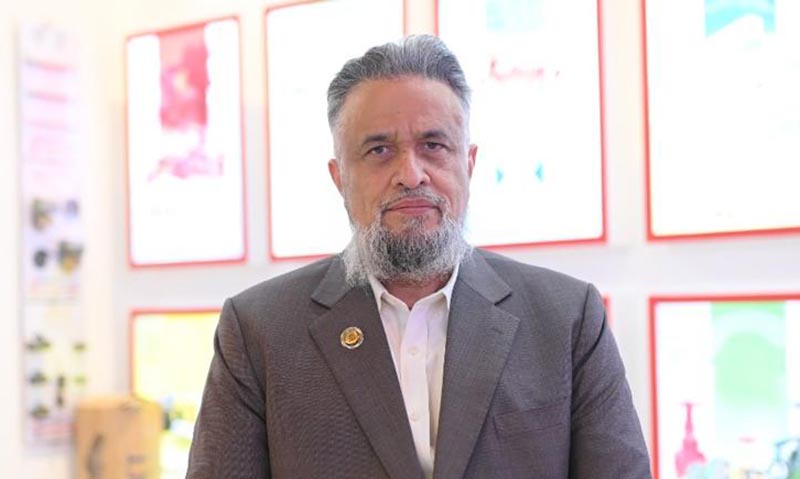
An insightful conversation with Mr. Diwan Fakhruddin, Chairman Fakhri Group
Federation of Pakistan Chambers of Commerce & Industry’s Pak-UAE Business Council has emerged as a significant platform for enhancing trade, investment and economic cooperation between Pakistan and the United Arab Emirates. Under the leadership of Chairman Diwan Fakhruddin, the council has been actively working to strengthen business-to-business connectivity and create new opportunities for industrial collaboration between the two countries. Alongside his role at the Pak-UAE Business Council, Diwan Fakhruddin also heads the diversified Fakhri Group of Companies, which operates in HVAC, firefighting, renewable energy and manufacturing sectors with a business presence across Pakistan, the UAE and Qatar. During an exclusive conversation with Engineering Post, he shared his views on the strategic evolution of Pakistan-UAE economic relations, overseas employment, industrial growth and future investment opportunities.
Discussing the growing partnership between Pakistan and the UAE, Diwan Fakhruddin explained that the relationship has evolved from traditional diplomacy into a broader strategic alliance based on decades of trust and mutual support. He noted that since the establishment of diplomatic relations in 1972, the UAE has consistently supported Pakistan during difficult economic periods, making the partnership increasingly important in today’s uncertain global economic environment. According to him, this strong bilateral relationship now serves as a stabilizing factor amid shifting geopolitical and economic conditions around the world.
Speaking about trade growth between the two countries, he highlighted that geographical proximity has significantly improved logistics efficiency and facilitated stronger commercial integration. He observed that Dubai’s position as a global trade hub has provided Pakistan with valuable access to international value chains and export markets. “Trade between Pakistan and the UAE is no longer limited to traditional sectors. We are witnessing diversification into high-value industries, which is creating a stronger and more resilient framework for private-sector collaboration,” he said.
Discussing the challenges faced by Pakistani companies operating in competitive international markets, Diwan Fakhruddin stressed the importance of professionalism, transparency and compliance with international standards. He explained that success in markets such as the UAE requires businesses to adopt a culture of accountability and integrity. “Professional conduct is not just an individual responsibility; it reflects directly on Pakistan’s global commercial reputation. Companies that wish to compete internationally must ensure strict compliance with global standards and regulations,” he said.
Talking about the expansion strategy of the Fakhri Group of Companies, Diwan Fakhruddin explained that the group has adopted diversification as a key approach towards long-term sustainability and growth. He stated that despite economic challenges, the group successfully expanded into HVAC, firefighting, renewable energy and manufacturing sectors across Pakistan, the UAE and Qatar. “Every challenge also creates opportunities for innovation and growth. Diversification has allowed us to strengthen our market presence and respond effectively to changing industry demands,” he noted.
Highlighting future opportunities for bilateral cooperation, Diwan Fakhruddin described the inauguration of the Dubai International Chamber’s representative office in Karachi as a major institutional development that would strengthen B2B connectivity and facilitate Emirati investment in Pakistan. He pointed out that sectors such as agriculture, textiles, fintech, logistics and the halal economy possess enormous untapped potential. “If Pakistan can ensure policy consistency and continue structural reforms, these sectors can emerge as powerful engines of sustainable economic growth and attract significant foreign investment,” he concluded.