
Report by Engineering Post
The federal government after all has formulated and unveiled a rather quite ambitious National Industrial Policy 2025-30 thereby also marking a decisive shift from decades old protectionism toward an export-oriented, innovation driven industrial economy and seeking to realign Pakistan’s economy by lowering tariff barriers, simplifying regulations , and revving dormant industries.
As per available documents, the Industrial Policy has proposed comprehensive tariff reforms under which customs duty slabs will be reduced to just four 0,5,10 and 15 percent over the next five years, while
Additional and Regulatory Duties will also be phased out altogether. It has been estimated by the official quarters concerned that these changes will expectedly deliver Rs 175 billion in cost saving to the industry during the current financial year 2025-26 alone.
The policy also aims to eliminate regulatory distortions that have constrained manufacturing competitiveness. The Companies Act 2017 has also been amended to ease incorporation and operations for unlisted firms, while security clearance requirements for foreign investors were also being streamlined..
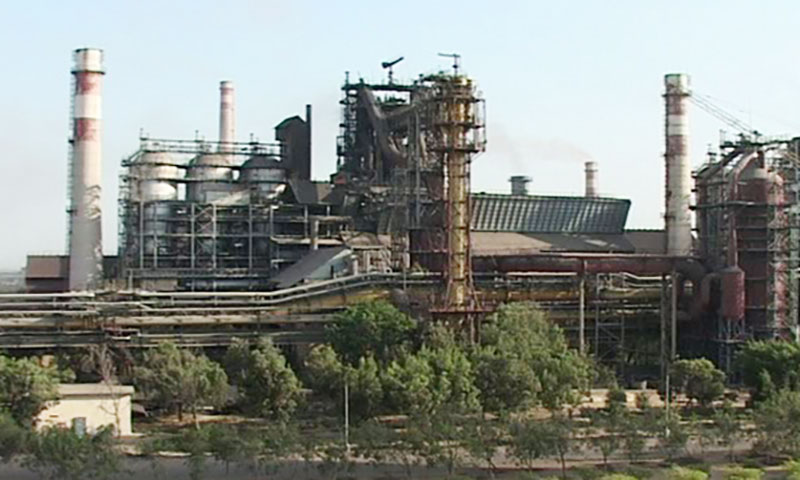
The centerpiece of the National Industrial Policy is the new Debt Regulation and Industrial Revival Framework which has been developed jointly by the State Bank of Pakistan, the Securities and Exchange Commission, and the Pakistan Banking Association. The framework seeks to rehabilitate non-performing but potentially viable industrial units which have been burdened by debt and outdated technology. A new National Industrial Revival Commission will oversee the restructuring of the distressed assets, encourage mergers and acquisitions, and bring idle plants back into production and employment.
In the energy and credit markets, the policy is going to introduce several targeted reforms aiming at lowering the costs and improving access. Special electricity tariffs will accordingly be offered to high-tech greenfield industries such as electric vehicles, data centers, and battery manufacturing, while a revised wheeling policy will reduce power rates for the exporters. The federal government as such also plans to encourage banks to lower capital adequacy risk weightlifting’s for medium enterprises, thereby expanding credit access for small and medium-sized manufacturers.
Broader macroeconomic targets of the National Industrial Policy (NIP) include raising exports to $ 60 billion by 2035, achieving 6 percent Gross Domestic Product (GDP) growth with 8 percent annual industrial growth, and lifting total investment to 15 percent of GDP. It explicitly aligns with Pakistan’s current International Monetary Fund (IMF) programme, emphasizing reforms that were fiscally neutral but structurally powerful lowering tariffs, simplifying taxation, and improving regulatory efficiency rather than introducing new subsidies.
The NIP as such represents more than a set of economic measures, it was an attempt to rebuild the country’s industrial spirit, the federal government intention was not merely reviving the factories but rather more emphatically rebuilding the very spirit of v enterprise that once had made the country a rising industrial power.