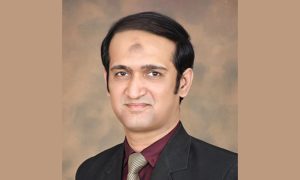

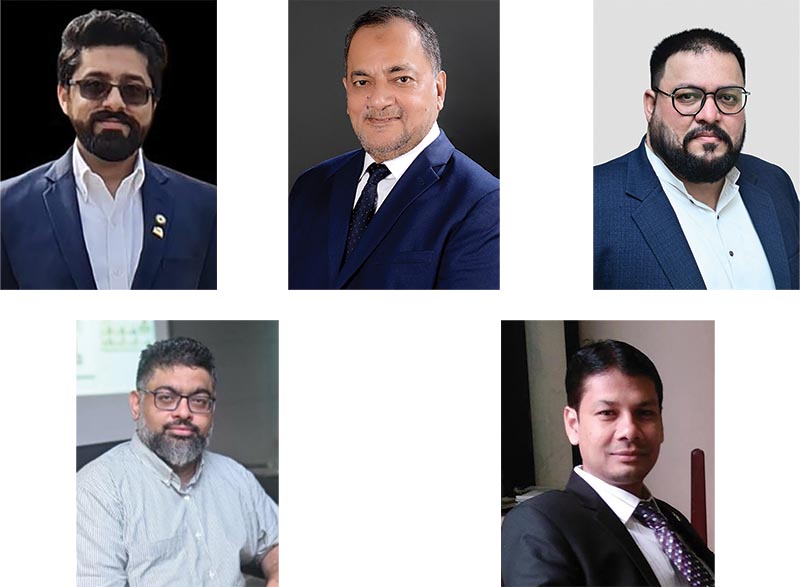
Shuja Khalid, President, ASHRAE Pakistan Chapter (2025-2026)
Smart Decarbonization and the Future of HVACR in Pakistan
Colleagues and industry pioneers,
We are at a pivotal moment for the HVACR industry in Pakistan. The quality and intelligence of our built environment are intrinsically linked to our nation’s progress, presenting us with an unprecedented opportunity for leadership. Now is the time for us to champion a new, more ambitious vision for the future.
This vision is encapsulated in the theme of the upcoming HVACR Trends 2025 Exhibition & Conference: Smart Decarbonization. This is a strategic call to action, moving beyond simple energy efficiency to fundamentally rethink how we use energy. It means leveraging Artificial Intelligence for predictive optimization, advancing refrigerant technology, and embracing circular design principles. For Pakistan, this is a chance to leapfrog legacy systems, embedding sustainability into the very fabric of our infrastructure.
Translating this vision into practice requires advanced skills. Our chapter is committed to empowering members with the necessary expertise through targeted training. Upcoming courses like Designing Toward Net-Zero Energy Commercial Buildings and Advanced HVAC Design for High-Performance Healthcare Facilities are prime examples, empowering us to design commercial buildings that slash energy use by over 50% and to engineer healthcare facilities that actively reduce hospital-associated infections.
I invite all stakeholders—engineers, architects, innovators, and policymakers—to join this vital dialogue at the HVACR Trends 2025 conference and enhance your capabilities through our training programs. This is our shared responsibility and a collective journey toward building a more intelligent and sustainable Pakistan.
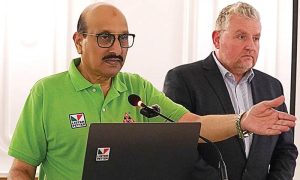
Muhammad Abbas Sajid, Nominating Committee Member, ASHRAE
Regional At-Large
A Convergence of Purpose: From Global Standards to Local Impact
To the HVACR Community of Pakistan and Beyond,
In my work with ASHRAE across the region, I see a universal shift. The question is no longer if we must decarbonize, but how swiftly and smartly we can achieve it. The global standards we develop are blueprints, but their true test is in local implementation. That’s why this year’s HVACR Trends 5.0 conference is so critically important for us here in Pakistan.
The integration of AI and Innovation is the engine of modern sustainability. It transforms a building from a static energy consumer into a dynamic, responsive ecosystem. This “Smart Decarbonization” is about precision—using data to eliminate waste, to maintain ideal conditions with minimal energy, and to extend the life of our equipment. It’s about doing more with less, and doing it smarter.
Our practices must evolve. It’s not enough to install a high-efficiency chiller; we must now ask how it can be integrated with solar power, how AI can optimize its load, and how its refrigerants can have a near-zero global warming potential. This holistic approach is the future, and it is a future we must build together.
This conference is a vital platform for this knowledge transfer. It’s where global best practices meet Pakistani ingenuity. I am excited to witness the collaboration and the innovative spirit that will undoubtedly emerge. Let’s use this opportunity to align our national expertise with the global mission for a sustainable and resilient future.
I look forward to engaging with you all on 12-13 December at Karachi Marriott.
Omer Khan, Chairman Organizing Committee, HVACR Trends
Forging a Greener, Smarter Future for Pakistan
Friends, Colleagues, and Industry Pioneers,
As we gear up for the HVACR Trends 2025 Exhibition & Conference, I find myself reflecting on a simple truth: the air we condition inside our buildings is intrinsically linked to the health of the atmosphere outside. For too long, this connection has been a challenge. But today, it represents our greatest opportunity.
Our theme, “Smart Decarbonization,” is not just a catchy phrase. It is a call to action. It’s about moving beyond simply using less energy to fundamentally rethinking how we use it. Pakistan stands at a pivotal moment. We have the chance to leapfrog legacy systems and embed intelligence and sustainability into the very fabric of our built environment.
This means embracing Artificial Intelligence not as a buzzword, but as a practical tool. Imagine systems that don’t just react to the weather but predict it, optimizing themselves to save power before demand even peaks. Think of innovations in refrigerant technology and circular design that turn our HVACR systems from contributors to the problem into pillars of the solution.
This event is our collective workshop. It’s where engineers, architects, innovators, and policymakers will connect to turn these ideas into tangible practices for Pakistan. The journey to a decarbonized future is a shared one, and it starts with a conversation. I invite you to join us at the Karachi Marriott this December to begin that vital dialogue.
Let’s build a cooler Pakistan, in a warmer world, intelligently.
Ibad Hasan, President Elect, ASHRAE Pakistan Chapter
Leading the Change from the Ground Up
My Friends in the HVACR Community,
There’s a powerful energy building in our industry right now. You can feel it in the conversations, in the projects, and in the shared determination to do better. As we look ahead to the HVACR Trends 5.0 event, I see this as our moment to channel that energy into a unified force for change.
Our chapter’s mission has always been to advance the art and science of what we do. Today, that means leading the charge on “Smart Decarbonization.” For me, this is personal. It’s about the legacy we leave for the next generation. It’s about proving that Pakistan’s HVACR sector can be a global exemplar of sustainability, driven by smart technology.
The beauty of integrating AI and innovation is that it empowers us all. It gives a building manager in Lahore the same intelligent tools as an engineer in Singapore. It allows us to tackle our unique climate challenges with globally-informed, locally-adapted solutions. This isn’t just about reducing carbon footprints; it’s about building smarter, more resilient cities and industries right here at home.
The Pakistan Chapter of ASHRAE is committed to being your partner in this journey. We see this conference as the launchpad. It’s where we will move from theory to practice, from ambition to action. The connections you make and the ideas you discover here will be the seeds for the sustainable projects of tomorrow.
I am genuinely excited to walk the exhibition floor with you, to debate in the conference sessions, and to work together in building a cleaner, cooler, and more intelligent future for Pakistan.
See you all at the Karachi Marriott.
Faraz Khan, Communication Committee Chair ASHRAE Pakistan Chapter
Pakistan’s large-scale manufacturing (LSM) sector posted a year-on-year growth of 2.69 per cent in September, marking a welcome uptick in industrial activity and reinforcing optimism for the broader economy. Fresh data from the Pakistan Bureau of Statistics shows that output also rose 2.05 per cent on a month-on-month basis, indicating that industries are regaining momentum after earlier disruptions caused by flooding.
The July–September period proved even more encouraging, with LSM expanding by 4.08 per cent. Economists note that sustained improvement in manufacturing, an industry contributing nearly 8 per cent to the country’s GDP can significantly support fiscal stability, job creation and export competitiveness. The rebound is particularly important after the sector contracted 0.74 per cent in FY25 and posted a marginal decline in FY24.
A major driver of growth this quarter has been the automobile sector, which surged by an impressive 84.58 per cent. Production of cars, jeeps, trucks and buses all recorded strong gains, signaling higher consumer confidence and improved supply chain conditions. Cement and food production also bolstered overall output, with food manufacturing rising 6.94 per cent on the back of strong wheat and rice milling.
Textiles, a key export earner, grew 1.88 per cent in the quarter despite a dip in value-added garments in September. Gains in rubber products, non-metallic minerals and electrical equipment further strengthened the LSM portfolio.
While certain segments such as pharmaceuticals, iron and steel, and some petroleum products posted declines, analysts stress that the return to consistent quarterly growth reflects stabilizing macroeconomic conditions.