
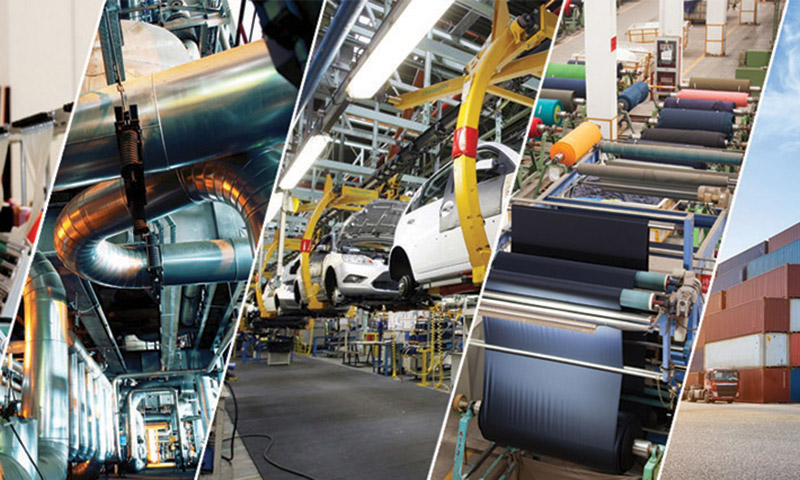
Pakistan’s Large-Scale Manufacturing (LSM) sector posted a negative growth of 0.74% in fiscal year 2024-25 compared to the previous year, according to data released by the Pakistan Bureau of Statistics (PBS).
While June 2025 reflected a 4.14% year-on-year increase, the sector registered a 3.67% month-on-month decline, highlighting volatility in industrial output.
The overall contraction was driven by declines in key industries including food (-1.83%), chemicals (-3.45%), non-metallic mineral products (-7.9%), iron and steel (-8.71%), electrical equipment (-11.65%), machinery and equipment (-35.46%), and furniture (-1.59%). Sector-specific contributors to the contraction also included garments (-0.88%), automobiles (-0.85%), petroleum products (-0.37%), and cement (-0.26%).
Despite the negative trend, several sectors reported encouraging performance. Automobiles surged by 46.15%, while other transport equipment jumped 36.60%. Similarly, coke and petroleum products grew by 5.33%, wearing apparel by 5.70%, textiles by 2.49%, and beverages by 1.29%.
Interestingly, the tobacco sector posted 7% growth for FY25, though it contributed negatively in absolute terms to overall LSM.
Economists warn that the marginal contraction in LSM highlights persistent structural weaknesses, despite notable rebounds in autos and petroleum. They stress that consistent energy shortages, high input costs, and weak demand continue to weigh on industrial activity.
Analysts believe that sustaining growth in performing industries while addressing bottlenecks in struggling sectors will be critical to reversing the downward trajectory. “LSM is a backbone of the economy, and its revival is essential for job creation and export growth,” experts noted.
The government is expected to engage industry stakeholders to address challenges and stabilize industrial output in the coming quarters.