

By Mohammed Tariq Haq, Founder & CEO, Energy Solutions (Pvt) Limited
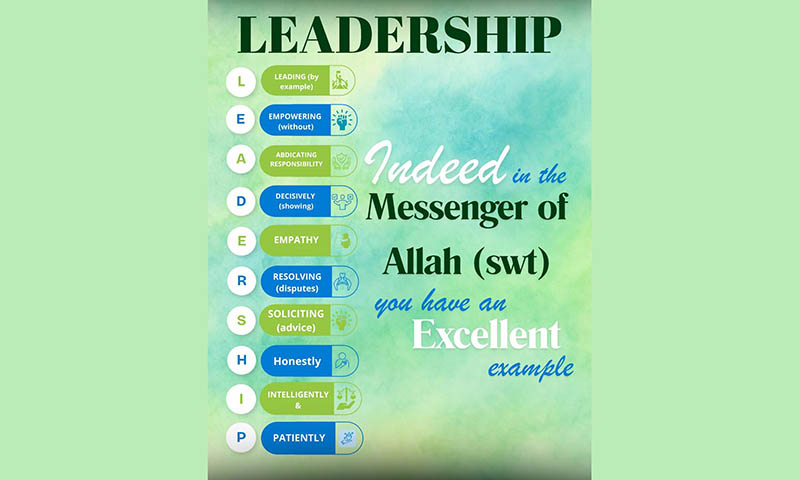
LEADERSHIP
Prophet Muhammad (peace be upon him) remains one of history’s most exemplary leaders. Using the acronym LEADERSHIP, we can explore how his life provides a timeless guide to effective and ethical leadership.
L – Leading by Example
The Prophet led through action, not command. When the mosque in Medina was being built, he carried bricks alongside his companions. In battles, he stood in the front lines, sharing both risk and effort. This demonstrated that leadership is not about privilege—it’s about participation. For business managers, this means modeling the behavior, they expect from their teams.
E – Empowering
He empowered his companions by delegating authority while remaining deeply engaged. He appointed governors, commanders, and administrators—such as Mu‘adh ibn Jabal in Yemen—entrusting them with autonomy but also guiding them with clear principles.
A – Abdicating Authority but Not Responsibility
The Prophet often delegated authority to capable individuals but never abdicated his ultimate responsibility as a leader. For example, he appointed commanders like Usama ibn Zayd, a young leader, to head a military expedition. Despite criticism from some elders, the Prophet upheld his decision, showing confidence in Usama’s ability while remaining responsible for the mission’s outcome.
This balance between delegation and accountability is a powerful model for modern managers: trust your team, but remain answerable for the results.
D – Decisively Showing Courage and Clarity
During the Treaty of Hudaybiyyah, the Prophet made a decision that seemed unfavorable to his followers. Yet his calm decisiveness and long-term vision turned that treaty into a strategic victory. Business leaders, too, must make bold decisions with clarity and foresight, even when immediate outcomes appear uncertain.
E – Empathy as a Strategic Strength
Empathy was central to his leadership. He understood people’s emotions and needs. He personally experienced poverty and hunger, which deepened his empathy. When a poor man came to him asking for food, the Prophet ﷺ gave away whatever he had at home, sometimes even borrowing to help others
He said:
“He is not a believer whose stomach is filled while his neighbor goes hungry.”
In business, empathy builds loyalty, trust, and a culture where people feel valued and motivated.
R – Resolving Disputes with Fairness
Before his prophethood, he resolved a major tribal dispute over placing the Black Stone in the Kaaba by proposing a solution that honored all parties. His wisdom prevented bloodshed and united the tribes. For managers, fairness in conflict resolution fosters respect and harmony within teams.
S – Soliciting Advice and Encouraging Dialogue
Before major decisions, such as the Battle of Uhud, he invited open discussion. This humility and inclusiveness created a culture of shared ownership. Modern leaders should similarly encourage dialogue, valuing diverse perspectives as sources of innovation and strength.
H – Honestly Building Trust
Honesty was the foundation of his leadership. Even his adversaries called him Al-Amīn (the Trustworthy). He never compromised truth for convenience. In business, honesty and transparency build the credibility that sustains long-term success.
I – Intelligently and Strategically Leading Change
The Prophet’s leadership combined intelligence with insight. His migration (Hijrah) to Medina was a strategic move to establish a stable community and new governance model. He planned meticulously, ensuring secrecy, alliances, and safety—an example of intelligent risk management.
P – Patiently Persevering Through Challenges
Patience defined his mission. He endured years of persecution in Mecca, yet never wavered in his purpose. For business leaders, patience is essential—enduring setbacks, managing crises, and maintaining composure until success unfolds.