
Report by Engineering Post
Pakistan’s principal industrial segment , Large-Scale Manufacturing (LSM), contracted marginally by 1.47 % during the first three quarters of the last financial year July 2024-March 2025 marking its third consecutive year of negative growth in varying ratios.
This decline has also followed a marginal contraction of just 0.22 % in the same period during the previous year 2023-24 underscoring the ongoing structural challenges, elevated input costs, and downturns in key sectors such as food, chemicals, iron and steel, and electrical equipment..
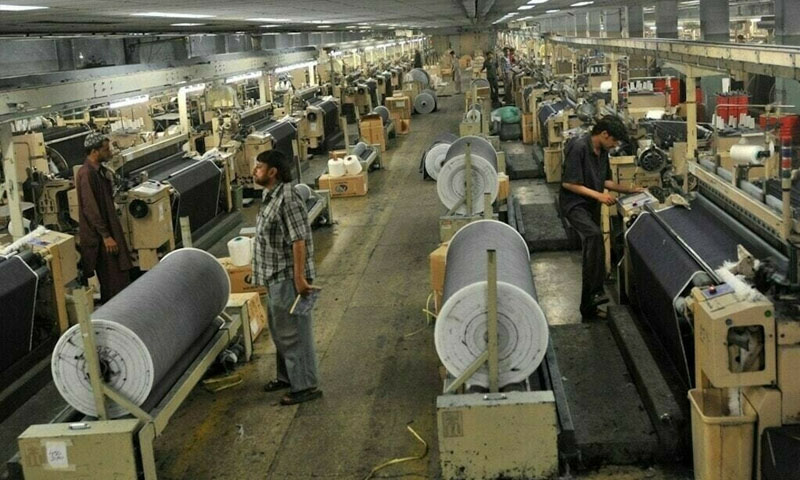
According to the information available from the official sources, despite the overall marginal contraction, almost half of LSM sub-sectors recorded positive growth in varying ratios. Industries such as textiles, wearing apparel, coke and petroleum products, pharmaceuticals, and automobiles showed some resilience . In March 2025, LSM had posted a year-on-year (YoY) increase of 1.8 % which was slightly up from 1.7 percent in March 2024. However, on a month-on-month (MoM) basis, LSM had declined by 4.6 per cent in March 2025 following a 5.6 decline in the previous month of February 2025,
The Mining and Quarrying sector also remained under pressure, contracting by 3.4 percent in FY2025, indicating a slight improvement from the 4.00 percent decline in the previous year. Quite noticeable reductions were recorded in the extraction of crude oil (-14.8%), natural gas (-6.8 %), coal (-5.7 %),and iron ore (-20.2%). However, on the positive side, production of Sulphur had surged by 341.9 percent, while dolomite (43.3 %), limestone 34.1 %), marble (20.2%), and ocher (70.3 %) also posted strong gains during the period under report here .
The manufacturing and mining sectors together account for 13.2 percent of the country’s Gross Domestic Product ( GDP) .Within the manufacturing sector, LSM contributes as much as 67.5 percent, equivalent to 8.0 percent of GDP, followed by small -scale manufacturing (2.4 %) and slaughtering (1.4%).
The sources pointedly stated that despite a number of policy support measures including 850 basic=point cut in the policy rate by the State Bank of Pakistan and winter electricity tariff relief by the Federal Government , the pace of recovery in the industrial production somehow continued to remain sluggish. Many LSM segments continued to struggle with high input costs, heavy taxation, and inconsistent energy supply.
Nearly 49 percent of the LSM basket showed positive growth in varying ratios, particularly in the sectors such as textiles, automobiles , apparel, tobacco, and transport equipment . However, on the other hand significant contraction in food, chemicals, and electrical equipment outweighed these gains thereby pulling down the overall aggregate performance.
According to the information available from the official sources, 12 of the 22 industrial groups had posted positive growth during the first three -quarters of the financial year 2024-25 indicating initial signs of recovery in the selected sub-sectors .