
About the Author
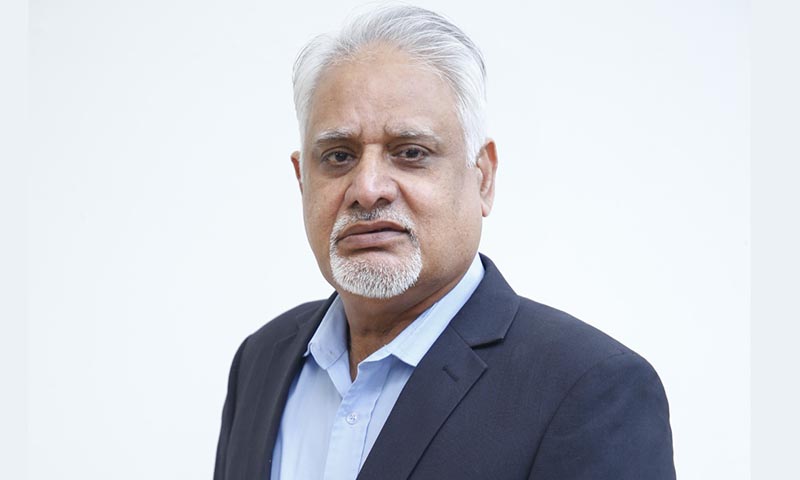
Muhammad Faheem Meer is a veteran cable industry professional with over 35 years of experience. An Electrical Engineering graduate from UET Lahore with an MBA in Marketing, he began his career at NESPAK in 1988. He has held key roles at Saudi Cable Company and Siemens in Saudi Arabia and the UAE, and has also contributed to leading local manufacturers such as Newage and GM Cables. He served as Regional Sales Manager at Brugg Cables in Dubai, one of the most reputed Swiss manufacturers of extra high voltage underground cables. Currently, he works as a freelance management consultant, supporting Worldwide Cables (Pvt) Limited, supported Pakistan Solar Association, and other organizations in various capacities.
Over the past decade, solar power has emerged as one of the most viable alternatives to conventional grid electricity supplied by utility companies. In Pakistan, the increasing cost of grid power, coupled with the availability of abundant sunlight, has accelerated the adoption of solar energy systems across residential, commercial, and industrial sectors. Solar systems offer several advantages, including lower operating costs, reduced dependence on the utility grid, and environmentally friendly power generation.
The Role of Solar Cables in PV Systems
Solar photovoltaic (PV) systems generate electricity by converting sunlight directly into electrical energy through solar panels. When sunlight strikes the solar cells, it excites electrons and produces Direct Current (DC) electricity. This DC power is transmitted from the solar modules to the inverter through specially designed solar cables. The inverter then converts the DC electricity into Alternating Current (AC), which can be used to power homes, offices, factories, and other electrical loads.
As the primary medium for transmitting power within the PV system, solar cables play a critical role in ensuring the safety, efficiency, and long-term reliability of the installation.
Evolution of Solar Cables
The earliest solar installations utilized conventional PVC-insulated electrical cables that were originally designed for general-purpose applications. While suitable for basic electrical installations, these cables were not intended to withstand prolonged exposure to sunlight, temperature extremes, moisture, and other environmental stresses commonly encountered in solar installations.
The rapid expansion of the solar industry created the need for specialized DC cables with enhanced performance characteristics. This led to several important developments:
- Introduction of cross-linked insulation materials such as XLPE and XLPO for higher temperature resistance and longer service life.
- Development of UV-resistant and weather-resistant compounds capable of surviving 25+ years in outdoor environments.
- Adoption of Low Smoke Zero Halogen (LSZH) materials to improve fire safety and reduce toxic emissions during combustion.
- Improved resistance to ozone, moisture, abrasion, chemicals, and environmental aging.
- Use of tinned copper conductors to enhance corrosion resistance.
- Greater flexibility to facilitate installation in rooftop and utility-scale solar projects.
- Standardization through international specifications such as EN 50618, IEC 62930, and TÜV certifications.
- Development of higher voltage-rated cables suitable for modern 1.5 kV DC solar systems.
Why Solar Cables Require Special Design?
Unlike AC cables, solar cables operate under continuous DC voltage. In AC systems, the voltage polarity alternates many times per second, which distributes electrical stress across the insulation. In contrast, DC voltage maintains constant polarity, creating continuous electrical stress on the insulation system, requiring better insulation properties.
Additionally, solar cables are typically installed outdoors where they are exposed to ultraviolet radiation, temperature fluctuations, moisture, ozone, chemicals, and mechanical stresses for decades. These demanding operating conditions necessitate the use of specially engineered materials and construction techniques.
Key Differences Between AC and Solar (DC) Cables
| AC Cables | Solar (DC) Cables |
| Alternating current (changes direction) | Direct current (constant polarity) |
| Alternating electrical stress requires moderate insulation demand (lower insulation thickness and average quality) | Continuous electrical stress; requires higher insulation demand (higher insulation thickness and superior quality) |
| Standard insulation (PVC / XLPE) | Enhanced insulation (XLPO/XLPE/EPR /LSZH) |
| Used in grid, transmission & distribution | Used in PV strings (module → inverter) |
| Regular installation, can accommodate solid or stranded conductors | Complex installation, needs flexible conductors for extensive bending |
| Mainly thermal aging | Electrical + thermal aging (space charge effect) |
| Installed in controlled environments | Installed in harsh outdoor conditions |
| Limited UV/weather resistance required | High UV, ozone & weather resistance |
| Moderate chemical resistance | High resistance to chemicals, ammonia & corrosion |
| General Standards; BS 6004/BS 6346/IEC 60502 | General Standards; BSEN 50618 / IEC 62930 |
Conclusion
Although solar cables may appear similar to conventional electrical cables, their design requirements are significantly more demanding. Continuous DC voltage, long-term outdoor exposure, and the expectation of a service life exceeding 25 years require superior insulation systems, enhanced environmental resistance, and specialized construction.
Selecting certified solar cables that comply with internationally recognized standards such as EN 50618 and IEC 62930 is essential for ensuring the safety, reliability, and performance of solar installations. As solar energy continues to expand globally, high-quality DC solar cables will remain a critical component in maximizing the efficiency and longevity of photovoltaic systems.