
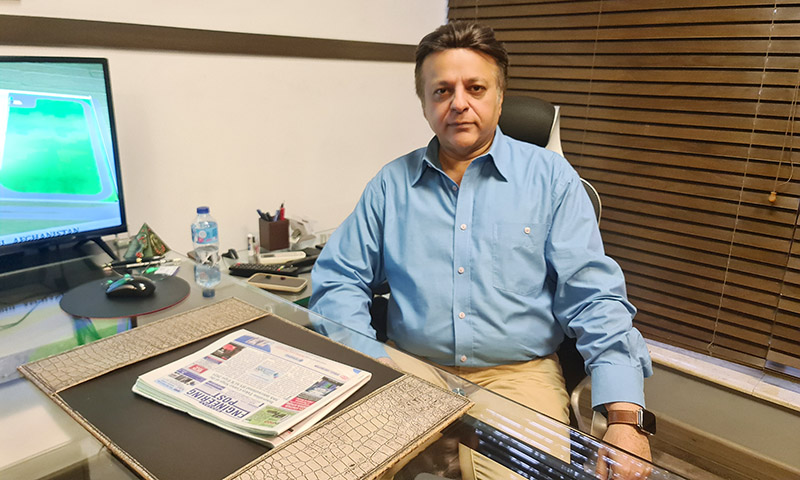
A Perspective from Engr. Abrar Ahmad, Director, Progressive Consultants (Pvt) Ltd
Pakistan’s engineering and consultancy sector is at a critical juncture; one that demands collective effort, visionary leadership, and structural reform. Among the many voices speaking for the industry’s betterment, few are as seasoned and thoughtful as Engr. Abrar Ahmad, Director of Progressive Consultants (Pvt) Ltd. With over five decades of family heritage in the engineering consultancy space, Engr. Abrar Ahmad offers not just a retrospective of the industry’s evolution but also a compelling roadmap for its future.
Founded in the 1970s by his father, a civil engineer, and formally converted into a private limited company in 1989, Progressive Consultants has seen Pakistan through multiple waves of industrial change. But Engr. Abrar Ahmad’s focus goes far beyond his company. His concern lies in developing an engineering ecosystem in Pakistan that can compete internationally, foster innovation, and retain local talent.
Reflecting on his company’s journey, Engr. Abrar Ahmad notes, “Over the years, we’ve evolved with the needs of the country. When the textile industry was booming, we responded by gearing up to cater to its architectural and engineering requirements. Later, when the chemical and captive power plant sectors emerged, we pivoted again. That ability to adapt is what keeps an engineering firm relevant and it’s what the whole industry needs.”
In his decades-long career, Engr. Abrar Ahmad has seen the industry through various phases from pioneering projects like the first locally designed fertilizer plant, to working with global giants like Siemens – Germany on power projects, to designing over 8,000 hospital beds across institutions like Punjab Institute of Cardiology, Jinnah, Shaukat Khanum, Cancer Care, KRL, and The Children’s Hospitals. Yet he rarely dwells on his firm’s accolades. For him, the bigger picture is always Pakistan’s collective progress.
He argues that Pakistan’s consultancy sector holds untapped potential, especially on the international stage. Citing an experience where a Pakistani delegation went to Qatar to bid for engineering projects, Engr. Abrar Ahmad points out a fundamental challenge: “The major reason we couldn’t secure those projects was the requirement for sovereign guarantees something we, as private firms without government support, couldn’t provide.”
This, he believes, can be overcome if local giants shift their focus outward. “Large-scale Pakistani companies must stop competing for small local projects and instead aim to secure international work. They have the scale, resources, and talent to execute global assignments. But to do this effectively, they should form consortiums with smaller local firms to strengthen their bids and expand their capacity.”
His firm has had a presence in Dubai for over three decades and maintained an office in Muscat, Oman, for eight years. Experience that gives him a grounded understanding of regional opportunities. “As individual companies, we can sometimes succeed internationally. But when we operate collectively with unified goals and state backing, Pakistan as a whole benefits. Engineering services should be our next big export.”
Engr. Abrar Ahmad also emphasizes the quality of “Made in Pakistan” products, a phrase often dismissed by the local market due to misplaced skepticism. “There are many world-class materials and products being produced here. Aluminum, glassworks, HVAC components, and specialty chemicals, just to name a few. Some of these are even being exported. But for broader acceptance, companies must focus on certifications, quality assurance, and especially after-sales service.”
A recurring theme in his views is the need for systemic reforms in the engineering profession. He proposes that Pakistan adopt global best practices in engineer training and licensing. “In countries like the U.S., engineers must pass state-specific exams and work under a licensed professional before they can practice independently. We need a similar system here. Our engineering graduates should work under experienced mentors before they’re allowed to sign off on projects.”
On the issue of “brain drain”, Engr. Abrar Ahmad is both pragmatic and hopeful. “It’s our responsibility to make engineering an attractive profession within Pakistan. If we provide the right environment, resources, and career growth, our brightest minds will stay. We need to raise the standard of engineering education, modernize curricula, and make internships under licensed professionals mandatory.”
For him, the key to transformation lies in adopting technology and staying current. “Engineering isn’t a static field. The tools we use today weren’t even known five years ago. If we want to remain competitive, we must train our engineers in the latest software, methodologies, and technologies. That’s the only way we can bridge the gap between us and the developed world.”
He Is also a strong proponent of industrialization as a national priority. “The only sustainable way to support our economy is through industrial growth. We need to create Export Promotion Zones (EPZs) where everything from licensing to logistics is handled under one window. These zones can be the Launchpad for Pakistani products to enter global markets.”
Using Sialkot as a success story, he illustrates the point. “Sialkot makes the world’s best footballs. If they can do that, why not cricket balls or tennis rackets? With some government support and encouragement, these industries can scale rapidly and generate employment not just for engineers but for skilled and semi-skilled workers too.”
Manpower, he believes, is one of Pakistan’s greatest assets but only if it is trained. “We often say we have a large young population, but numbers mean nothing without skill. Vocational training must be prioritized. Whether it’s welders, electricians, or CAD operators they all need formal training. That’s how you become part of the global supply chain.”
When asked what advice he would give to the new generation of engineers, Engr. Abrar Ahmad is unequivocal: hard work and continuous learning. “Today’s young engineers are tech-savvy and that’s great but they must also learn from the experience of those who’ve come before them. There’s no substitute for hard work. Progress is 1% intelligence and 99% effort.”
He also urges young professionals to cultivate the habit of reading. “They should read technical journals, industry reports, and case studies. The more they read, the better they’ll understand how to apply old principles to solve new problems. It sharpens both their analytical thinking and their ability to innovate.”
On the topic of engineering consultancy in Pakistan, Engr. Abrar Ahmad makes a critical observation: “Authorities like PEC and others must ensure that all consultancy firms new or established get equal opportunities. There needs to be a transparent mechanism that supports merit-based selection. Newcomers should be encouraged, not stifled. That’s how we develop a healthy ecosystem.”
Engr. Abrar Ahmad believes that Pakistan is standing at the edge of a remarkable opportunity. “As global costs rise, countries are looking for affordable alternatives. Pakistan can be that alternative in engineering, manufacturing, and services. But to capitalize on this, we need vision, collaboration, and commitment from individuals, institutions, and the state.”