
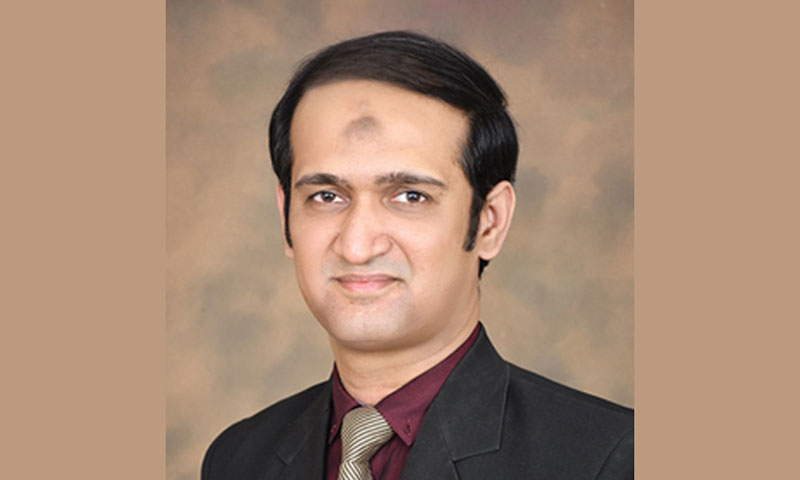
Engr. Dr. Muhammad Nawaz Iqbal
The process of engineering education leads to a special kind of demeanor towards problem solving and that is a logical, highly precise, and an ordered experimentation process. When such attitude translates into the entrepreneurship world, it establishes a rich environment of innovation that is down to earth and scalable. Engineers do not merely dream of the solution as many of them do, but design/simulate/test it and repeat until the solution is generated and proved to work in the real world. This in effect puts them in a position to develop ventures that are not mere ideas but proven mechanisms that can churn out quantifiable results.
The engineers tend to begin by exploring inefficiencies whether in the mechanical processes, software algorithms, or industrial processes. This skill of observation when translated to application in the marketplace becomes the art of opportunity recognition. Engineering entrepreneurs do not blindly go with the trend, they dig deeper and find the unmet needs that are entangled in the layers of dysfunction of the systems. Theirs are often startups created out of the notion of re-engineering the broken as opposed to imitating the already existing.
It is not a leap of faith that creates a successful blueprint to business plan transformation but a carefully thought out. The use of data-derived and projection-based market maps could only be done by engineers who develop models and simulations. Knowing what the consumer adoption curve is likely to be or modeling the use case of a product is just one of the ways in which these founders mitigate entrepreneurial uncertainty by having an analytical sense of the future. They do the study of the entrepreneurship with as much rigor / approach as they would to a thermodynamics problem or an embedded system writing.
The capability to break down huge and complex issues into smaller, manageable parts is one of the valuable characteristics that engineers possess in entrepreneurship. It is not a matter of technical architecture only, the same thing applies to the making of a business. They deconstruct operations, customer experience and product development into systems that they can improve in parallel. This modular thinking enables startups to grow by design, rather than by accident so that every aspect of the business is designed to grow as demand increases.
The limitations fire up invention in engineering. Limited power in a circuit or limited bandwidth in a network are regarded as the price of being an engineer. This attitude transfers very well into bootstrapped entrepreneurship, where entrepreneurs may have to start and scale-up with strained resources. The ease with which constraints are embraced by an engineer stimulates the emergence of lean startups that produce maximum in minimal cost- a vital aspect in sustainable scalability.
The iterative cycle of building and testing and refinement is perhaps the identifying flag of any engineering culture. This is reflected through the business managerialization practice of the development of minimum viable products (MVPs). Founders are former engineers, able to quickly create and release a minimal viable product that is solid and well user-optimized. They do not idealize their idea initially, they hammer it out tirelessly, and they learn with each data point, bug and customer comment.
Most entrepreneurs have problems in translating vague concepts into practical realities, whereas, engineers specializes in operationalization of vision. They also develop the product at the conceptual level but they have the capacity to construct prototype forms of the product. Self-sufficiency speeds up the startup cycle, limits the need to depend on third party development or manufacturing, and leads to a tremendous culture of internal innovation.
Artificial intelligence and blockchain along with the Internet of Things are some of the new technologies that engineers will be better suited to exploit. They do not only use such tools but they know its architecture. Such fluency in the depths of the technical realm enables their establishment of startups on the boundaries of technology. Their projects do not merely respond to new technologies trends but create them and establish standards within the whole industries.
Data orientation of engineers is one of the highly negative unrecognized strengths of engineer. They are taught to follow empirical evidence as opposed to their gut feeling. This is applied in the entrepreneurial setting in the form of data-driven decision making where information determines the product, marketing, and customer experience improvement. This scientific way of startup growth leads to startups that are less likely to face an expensive miscalculation in their efforts and also one more adjusted to reality.
Ethics is compiled into the engineering learning experience-whether through case studies of failure or even safety measures. Such moral compass is even more applicable within the field of entrepreneurship especially during the development of technologies that directly reach the life of a human being. The notion of social responsibility of the engineer-entrepreneur is also a strong aspect, and in that way, the innovations produced through the engineer-entrepreneur remain socially beneficial and can be commercially sold as well. This ethical feeling breeds credibility and confidence in a long term brand.
Scalability is not only one of the results of the business it is a principle of engineering. The systems are built to expand, remain efficient, and be responsive to the demand. In engineering, this way of thinking is applied by engineering entrepreneurs to venture architecture, where principles of redundancy, automation and load-balancing are applied in their operations. Design once, grow forever whether it is a SaaS platform or a biotech lab, the end goal is always the same.
The next strength of an engineer, which can be offered to the business world, is the collaboration between disciplines. It is the coordination among specializations that comes into play in large engineering projects that make them successful. Such cross-functional startup teams comprise designers, marketers, developers, and business analysts and this cross-functional collaboration DNA assists founders in leading them. Their capability in communicating in various technical languages being the first reason why they transcend into the ecosystems of different start-ups as their leaders effortlessly.
Failure is just part of the live in an engineering world. Engineers do not fear failure fast, and they want to fail forward. Such an attitude is essential in entrepreneurship when there is no right path to success. The ability to study, modify and re-launch is a particular strength particularly in fluctuant markets. The engineer-founders do not see pivots as failures, but optimizations opportunities.
Innovation does not occur in the vacuum as far as an engineer is concerned but it is closely related to usefulness and user experience. Engineer-entrepreneurs have discovered that no matter how brilliant a solution may be, it has no value unless it is a solution to a real problem in a usable solution form. This user-centric philosophy translates to startups that cannot only be technologically excellent but also can be integrated into the actual practice. They tend to win over the competition by simply addressing their pain points and resolving them, elegantly and with user-focused design.
The last ability of the engineer-entrepreneurs is the scalable impact. It is not just profits, they want to establish systems, platforms and technologies that can reach millions of people. They are thinking about ecosystems and infrastructures, whether via med-tech innovations, clean energy solutions or AI-based platforms. Their vision is different, not restricted to just products but the transformation of society as whole, hence they are best poised to create the future, not just make predictions.