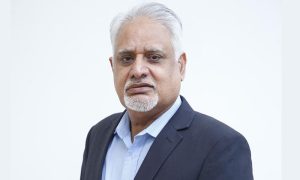


Engr. Dr. Muhammad Nawaz Iqbal
The engineering field is in a dramatic transition, due to digitalization, sustainability requirements, and fast technological developments. With all of this changing, skills and knowledge are no longer enough to ensure success in the long term. Engineers of the future will need to cultivate an entrepreneurial spirit to recognize opportunities, to creatively solve complex problems and to create value for society through innovation. Entrepreneurial thinking enables engineers to break out from the traditional engineering roles and be proactive participants in technological and economic development.
The entrepreneurial attitude challenges engineers to think about issues as opportunities to innovate, instead of stumbling blocks to progress. While analytical problem-solving has been the norm in engineering education, business savvy and strategic thinking are becoming increasingly vital in today’s industries. Through entrepreneurial development, future engineers are better prepared to be able to translate ideas into viable product, service and sustainable solutions to meet real world needs.
Curiosity is one of the basic components of entrepreneurial thinking of engineering students. Inquisitive people are always looking for knowledge, learning new technologies and challenging practices and processes. This mental curiosity leads to experimentation and experimentation and stimulates engineers to try out something different to solve a technical and/or social problem. This exploration can result in a revolutionary invention that can transform industries and generate new markets.
Another important trait is risk tolerance, which is a key trait of entrepreneurial engineers. A lot of engineering projects are uncertain, whether the technology is feasible, whether the market will accept the project or whether the resources are available to implement the project. Calculated risk helps future engineers to embrace their creativity and test out new concepts and ideas even if there is a possibility that it might fail. Such a spirit of experimentation helps build resilience and increases the chances of finding solutions that will transform.
Recognizing opportunities is a key part to being a successful entrepreneur. The next generation of engineers need to be able to look for and recognize the needs of these customers, inefficiencies within current systems and new technologies that could be turned into useful innovations. All three of technical knowledge, market awareness and environmental scanning are needed in opportunity recognition. Engineers that are proficient in this skill can develop solutions that can contribute to the economic and social impact as well as advance the technology.
The development of the entrepreneurial mindset is a key contribution of interdisciplinary learning. Cooperation will be necessary in various fields when dealing with modern problems like climate change, smart cities, integration of renewable energy and digital transformation. The business, economics, design thinking, psychology and sustainability aspects expand engineers’ horizons and their ability to create solutions that are integrated in their entirety. This holistically integrated capability enhances their capability to be effective innovators in complex environments.
Entrepreneurial engineers also need to have good communication skills. However, an innovative idea is essentially worthless if they are unable to convey it to stakeholders, investors, customers and team members. Clearly communicating technical ideas in plain language improves interactions, and helps with business development of engineering products. Effective communication also enhances leadership skills and increases opportunity for obtaining support for entrepreneurial endeavors.
Creativity and innovation should be infused across the engineering education. Entrepreneurship fosters divergent thinking and experimentation in a traditional engineering curriculum, which is focused on accuracy and standard solutions. Incorporating innovation related projects, design challenges and open-ended problem solving exercises can encourage creativity and boost student’s confidence around proposing creative solutions to complex engineering problems.
It is essential for entrepreneurial engineers to have the understanding of thinking from customers. The successful innovations are not just technically advanced, but are also useful and valuable to the users. Engineering students can learn about industry needs and real-world problems and provide solutions by interacting with customers, communities and industry stakeholders. Such user-focused approach will improve the quality of innovations and their commercialization.
Development of resilience needs to be a vital part of entrepreneurial development. Entrepreneurial journeys are often characterized with failures, technical issues, financial difficulties and uncertainties in the market. Engineers who have an entrepreneurial approach to failure learn to see it as a learning opportunity, and not as a setback. This resilience fosters adaptability and promotes ongoing enhancements, which are essential for navigating the fast-evolving world of technology.
Entrepreneurial engineers have never had such opportunities with digital technologies. The barriers have been broken down and new solutions can be rapidly prototyped through the use of Artificial Intelligence, IoT, Blockchain, Advanced Manufacturing and Data Analytics. The understanding of how these technologies can help future engineers to identify new business opportunities, and designing scalable solutions that can solve both local and global challenges.
Practices of entrepreneurial engineers increasingly take into account sustainability issues. Engineers of the future need to learn how to design innovations, which have to be economically efficient, socially responsible and environmentally friendly. Entrepreneurial thinking can be used to speed up the development of sustainable technologies, solutions for the circular economy, and systems that use resources efficiently to support long-term societal well-being with competitive advantages for the organizations.
Experiential learning is an important aspect in developing entrepreneurial skills. Students are exposed to real life problems and the processes of entrepreneurship through their involvement in start-up incubators, industry collaborations, competition for innovation, and project-based learning. These experiences will give them real-life experience with the process of identifying opportunities, managing resources, collaborating in teams, and growing ventures, enhancing their entrepreneurial self-confidence and competence.
Leadership development is intricately linked with cultivation of entrepreneurial mindset. Entrepreneurial engineers tend to develop into change agents who can inspire their teams, spur innovation and help to cut through uncertainty. Leadership experiences enable students to become adept decision makers, develop strategy and know how to mobilise resources effectively. The qualities listed above are becoming more and more desirable in business startups and companies.
Entrepreneurial Engineers should be nurtured in Education Institutions, where innovation and experimentation are nurtured. Multidisciplinary programmes, mentoring schemes, industry collaboration, start-up incubators, and innovation labs are ways to stimulate entrepreneurial actions in universities. These nurturing spaces allow for students to apply academic concepts and ideas to real-world situations and promote a creative, lifelong learning atmosphere.
Engineers with a keen entrepreneurial flair will be the future of the engineering profession. Entrepreneurial engineers can better contribute to technological innovations, to establishing viable businesses, and to solving the world’s problems. Educational institutions can nurture curriculum that inspires a new generation of engineers who can not only design solutions but also contribute to a positive transformation in society and the global economy, by developing their curiosity, resilience, opportunity recognition, creativity, leadership and awareness about sustainability.