
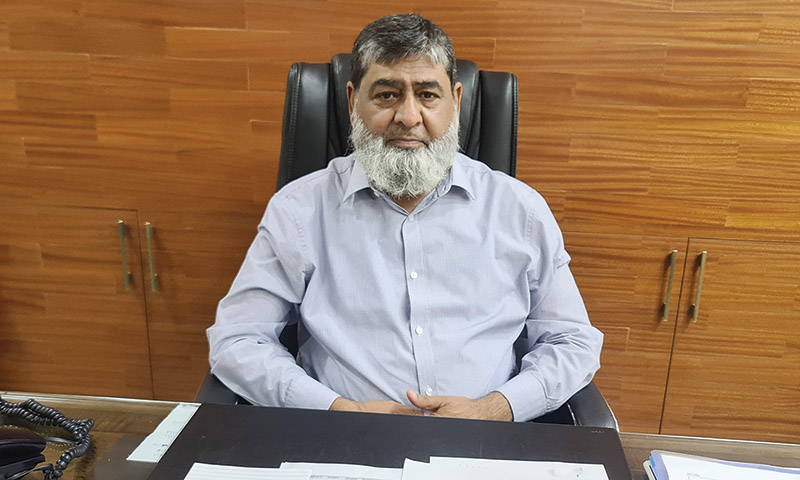
In conversation with Mr. Muhammad Khalid, CEO, Hammad Engineering
Hammad Engineering (Pvt) Ltd has become a leading name in Pakistan’s transformer manufacturing industry, serving WAPDA and other departments for over 25 years. Under the leadership of Muhammad Khalid, CEO of Hammad Engineering (Pvt) Ltd, the company has grown from modest beginnings to being counted among the top three transformer companies in the country.
“We are manufacturing Transformers from 1 Kva to 10 Mva (Voltage Up to 33 Kv) Power & Distribution transformers,” shared Muhammad Khalid during a recent exclusive conversation with Engineering Post “All Our WAPDA Rating Transformers are approved” Customization is our core competence, we offer custom-built transformers Solutions based on client requirements.”
We have a diverse clientele that includes public sector clients like WAPDA, MES, Etc. Hammad Engineering has expanded into the private sector that includes textiles, Cement, Sugar, Steel & other Industries and Housing Schemes, delivering high-quality, reliable solutions. Over the years, the company has invested heavily in technology upgrades to enhance precision and product quality. “Previously, press machines were the norm in the industry. We took a step forward and imported CNC machines from abroad, which significantly improved our product quality and efficiency,” said Muhammad Khalid.
A milestone achievement for the company has been the installation of an impulse testing lab, a facility that only two or three companies in Pakistan possess. This lab has placed Hammad Engineering at the forefront of quality assurance and testing within the local industry.
Hammad Engineering is a first Engineering Company with ISO 17025 accredited laboratory.
However, Muhammad Khalid expressed concern about the broader challenges facing the transformer manufacturing sector in Pakistan. He pointed out that the only government testing lab, located in Rawat, is insufficient for industry needs. “It has just one short-circuit generator, which remains out of order most of the time. The government must upgrade the existing facility and establish at least one additional lab in the country,” he urged.
In addition to infrastructure issues, Muhammad Khalid highlighted policy-level flaws, particularly in public procurement. “There used to be a proper system at WAPDA where a company’s production capacity was assessed before order allocation. That has been abandoned. Now, tenders are awarded to companies quoting unreasonably low prices sometimes even below the cost of raw materials. The government needs to understand how these firms are managing to deliver such products,” he said, warning that it puts serious manufacturers at a disadvantage.
He called for a fair policy where both production capacity and profitability are considered before awarding tenders. “A policy where a healthy profit margin is ensured would safeguard both quality and sustainability in this critical industry,” he said.
Looking forward, he believes that Pakistan has the potential to become a key exporter in the electrical equipment sector. “If the government supports local manufacturers in tapping into African and Middle Eastern markets, it will benefit not just companies, but the national economy. Our cost structure due to lower labor and overhead costs makes us internationally competitive,” he stated.
Beyond transformers, Hammad Engineering has diversified its product range to include current transformers, potential transformers, and resin-casted insulators. These were previously imported, but are now being produced locally under their new brand Metelx Technologies. “This is another step toward self-reliance and reducing Pakistan’s import burden,” said Muhammad Khalid.
Despite these achievements, he criticized recent policy decisions that have made doing business more difficult. “The new measures introduced by FBR are actually demotivating entrepreneurs instead of facilitating them. The government must focus on creating real ease of doing business if it wants to see industrial growth,” he emphasized.